Summer in America's national parks means long daylight hours, alpine wildflowers, and dramatic light stretching from early morning to late evening. But it also means crowds—unless you know where to go.
We spoke with acclaimed nature photographer and national parks expert QT Luong, author of Treasured Lands, who has made over 300 trips to U.S. national parks. Drawing on decades of experience, Luong shares his top five picks for national parks that deliver extraordinary summer photography without the overwhelming crowds. These parks offer accessible trails, unique geological features, and season-specific photo opportunities you will not find at any other time of year.
1. Lassen Volcanic National Park, California
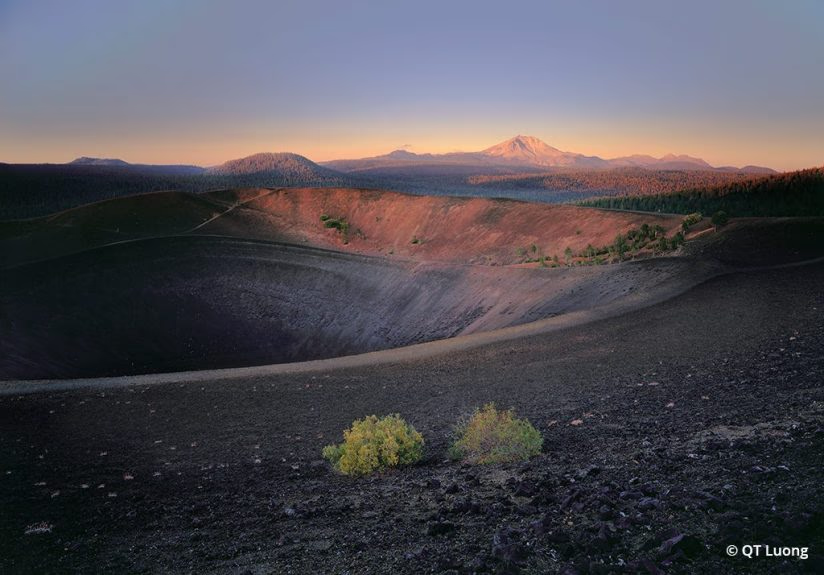
Cinder Cone rim and Lassen Peak at sunrise.
Think of Lassen as a mini-Yellowstone with a fraction of the visitors. It is the least visited national park in California and ranks 40th in overall visitation—meaning only 21 parks see fewer people, most of them in Alaska. For photographers, the payoff is remarkable diversity. Lassen contains every type of volcano found on Earth, plus steaming hot springs, lava flows, alpine lakes, and forested terrain reminiscent of the Sierra Nevada. It is also the snowiest place in California, so most roads stay closed until late spring, making summer the prime—and practically only—window for access.
2. Kings Canyon National Park, California
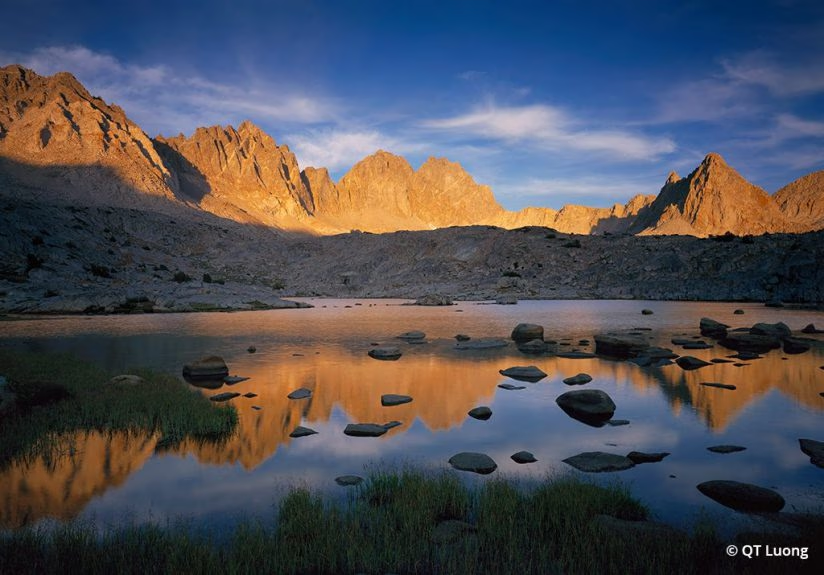
Palisades and Isosceles Peak from Dusy Basin at sunset.
Kings Canyon was deliberately designed as a wilderness park with limited road access, which keeps it remarkably quiet compared to neighboring Yosemite. The real treasure here is the high country. Starting around June, trails above 10,000 feet open up, offering backpacking opportunities with stable summer weather and mild temperatures. For photographers new to backpacking, this is one of the best places to start. Luong's favorite spot is Dusy Basin—a relatively short but steep hike that rewards you with west-facing alpine views, calm reflective lakes, and golden sunset light that lingers across the granite faces.
3. Great Basin National Park, Nevada
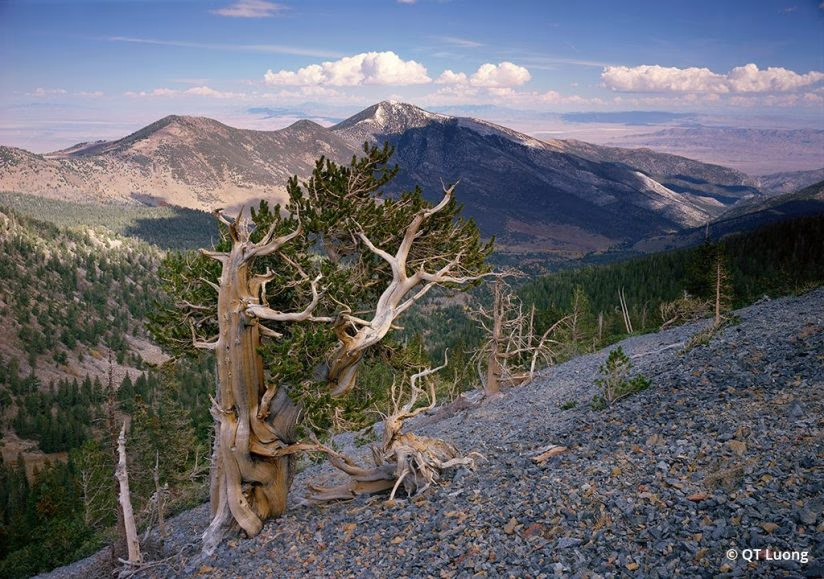
Bristlecone pines on Mount Washington.
Ranked 51st out of 61 parks in visitation, Great Basin sits in the middle of nowhere—and that is exactly what makes it special. A mountain range rises from the desert floor, offering a cool escape from the valley heat that can exceed 100°F. The main attraction is the Wheeler Peak Scenic Drive, which gives you drivable access to elevations around 11,000 feet, where you will find the oldest living trees on Earth: bristlecone pines. A short hour-and-a-half hike brings you face to face with these twisted, photogenic ancients. For the truly adventurous, a four-wheel-drive road leads to Mount Washington, where Luong spent days without seeing another person.
4. Glacier National Park, Montana
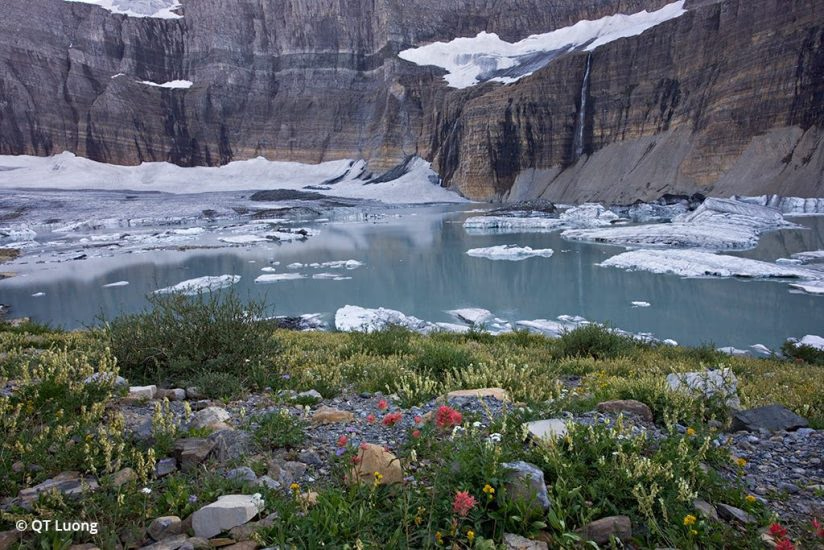
Upper Grinnell Lake and Glacier in late afternoon.
Glacier is widely regarded as one of the finest national parks for nature photography. The northern Rockies here are wilder and more intact than anywhere farther south, supporting grizzly bears, moose, mountain goats, and wolves. The limestone cliffs create steeper, more dramatic mountain profiles. Upper Grinnell Lake is a must-photograph location, though scientists warn the remaining glaciers may disappear within the next decade. For wildflower carpets, head to Logan Pass in mid-to-late July, where boardwalks protect fragile alpine meadows. The Going-to-the-Sun Road itself offers roadside photo opportunities that rival any trail. If you want solitude, drive the unpaved road to the North Fork area—no four-wheel-drive needed, just patience—and camp by lakeside spots with sunrise access steps from your tent.
5. Mount Rainier National Park, Washington
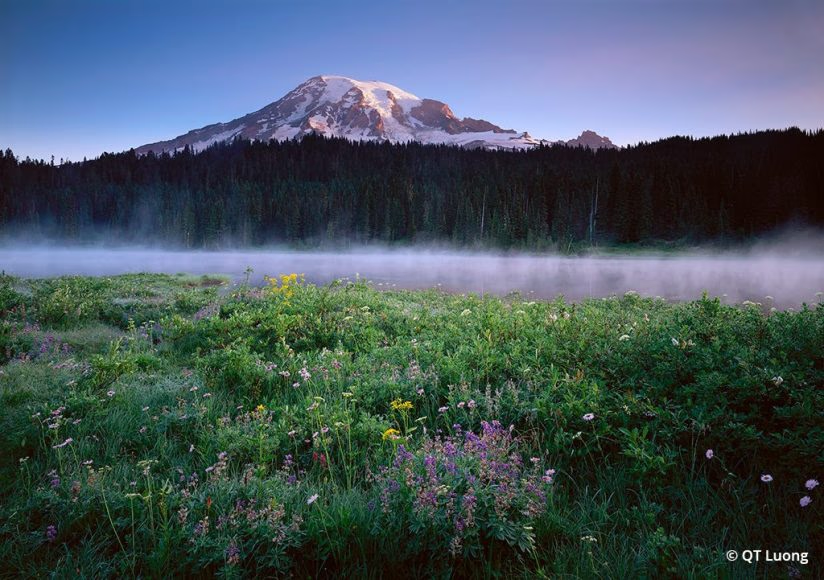
Wildflowers bloom profusely in the Paradise area from mid-July through late September.
Mount Rainier's base is the snowiest place in the continental United States, which creates an incredibly short but explosive wildflower season. The most famous spot is Paradise, where trails of every difficulty level lead through carpets of flowers with the mountain towering in the background. For the classic reflection shot, Reflection Lake delivers—just arrive by 5 a.m. in summer. If you want a different perspective, hike the Tatoosh Range across the valley, where you can frame the entire mountain from base to summit. For true solitude, visit the Carbon River entrance in the northwest corner, where an inland rainforest and unpaved roads keep the crowds to a minimum.
How to Avoid Crowds This Summer
Luong's proven strategies for a quieter park experience:
- Skip holidays and weekends
- Embrace bad weather—clouds and rain keep crowds away and add drama to your images
- Arrive early, stay late, and shoot under the stars
- Choose less-popular parks over headline destinations
- Explore lesser-known areas within each park
- Hike even a mile from the trailhead—you will lose 95% of the people
Practical Tips
- Check road conditions before you go. Many high-elevation roads in these parks are snowed in until June or even July.
- Pack a polarizing filter for alpine lakes and reflective water scenes at Kings Canyon and Mount Rainier.
- Bring a wide-angle lens for wildflower foregrounds and a telephoto for isolating mountain details and wildlife at Glacier.
- For Great Basin and Lassen, fill up on gas before arriving—services are sparse and cell reception is unreliable.
- If you are backpacking in the Sierra Nevada (Kings Canyon), you can often skip the tent in stable summer weather—a major help when carrying heavy camera gear.
Conclusion
The best summer national parks for photography are not always the most famous ones. Lassen, Kings Canyon, Great Basin, Glacier, and Mount Rainier each offer distinct landscapes and seasonal light that reward the photographer willing to plan ahead, arrive early, and hike a little farther. Whether you are chasing bristlecone pines, alpine wildflowers, or glacial reflections, these parks deliver world-class imagery with fewer crowds and unforgettable light.
FAQ
Which national park is best for beginners at backpacking photography?
Kings Canyon National Park. The weather is stable, the trails are well-maintained, and locations like Dusy Basin offer dramatic scenery with a manageable hike. You do not even need a tent in summer, which helps when carrying camera equipment.
What is the best time to see wildflowers in Mount Rainier National Park?
Mid-July through late September. Because the mountain base is the snowiest place in the continental U.S., the flowers bloom later than in most other parks. Paradise and Reflection Lake offer the most accessible and photogenic displays.
Are four-wheel-drive vehicles necessary for visiting these parks?
Not for the main attractions. Great Basin's Mount Washington road requires 4WD, and some secondary roads in Glacier and Mount Rainier are unpaved but passable with careful driving. All major scenic drives and trailheads are accessible with a standard vehicle.
How crowded does Glacier National Park get in summer?
It is one of the more popular parks, but crowds are concentrated at Logan Pass and the main trailheads. Even a two-mile hike will leave most visitors behind. The North Fork area remains surprisingly quiet due to its unpaved access road.
Can I photograph the bristlecone pines in Great Basin without a long hike?
Yes. Drive the Wheeler Peak Scenic Drive to the trailhead, and the bristlecone pines are about a 90-minute hike from there. It is one of the most accessible ancient bristlecone pine groves in the country.