Fujifilm X100V Review: Is This Retro Compact Camera Still Worth It?
The Fujifilm X100V is one of those rare cameras that makes you want to go out and shoot just for the joy of it. Designed as a premium APS-C compact with retro rangefinder styling, it packs a powerful 26.1 MP X-Trans sensor, a redesigned 23mm f/2 lens, and Fujifilm's beloved film simulations into a body that's small enough for everyday carry.
In this review, we'll take an honest look at the build, handling, image quality, and real-world performance of the X100V — and help you decide whether it's the right camera for your kit.
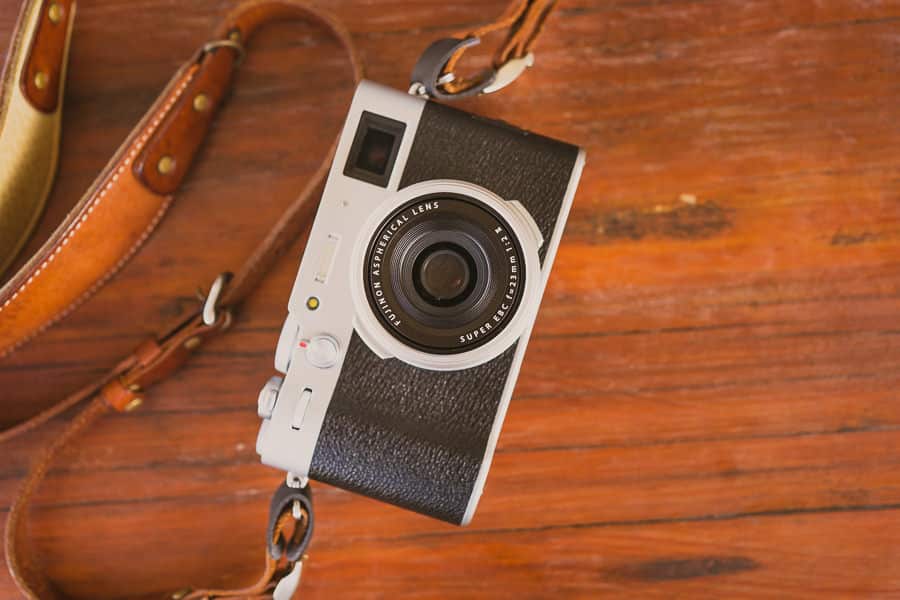
Build Quality & Design
The X100V is what many call a "bookshelf camera" — it looks so good you'll want to display it even when you're not shooting. The design stays true to the original X100 released in 2011, with smoothed edges, a simplified back, and a minimalist rangefinder-inspired silhouette.
The top and bottom plates are milled from single pieces of aluminum with a satin-coated finish. It feels solid in the hand, though the lower front section is plastic rather than rubber, which means grip is a little lacking. Weather sealing is also incomplete out of the box — you'll need to buy an adapter ring and filter (Fujifilm's AR-X100 and PRF-49) to fully protect the lens from the elements.
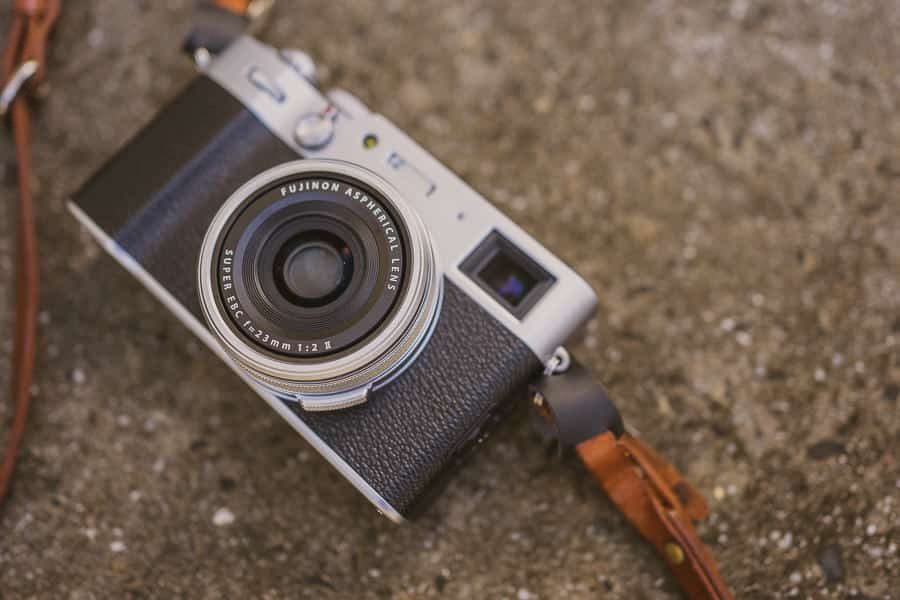
One standout upgrade is the tilting touchscreen LCD. It tucks away neatly into the body when not in use, preserving the clean lines of the camera. Combined with face and eye detection AF and tap-to-shoot, it makes getting creative low-angle or overhead shots incredibly easy.
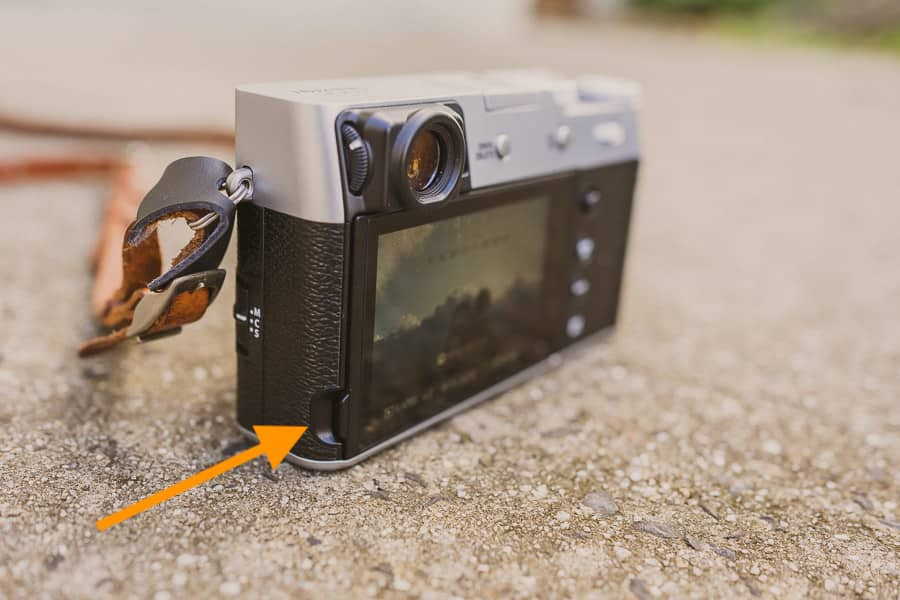
Ergonomics & Handling
Let's be honest — the X100 series has never been about ergonomic perfection. Much like a pair of stylish loafers that aren't ideal for a long run, the X100V prioritises aesthetics over all-day comfort. The lack of a pronounced grip is deliberate, and while understandable, it does mean you'll want to use both hands for extended shooting sessions.
That said, the dials are well placed. You get dedicated ISO, shutter speed, and exposure compensation dials on top, plus front and rear customisable controls. The new joystick for AF point selection is a welcome upgrade over the old d-pad.
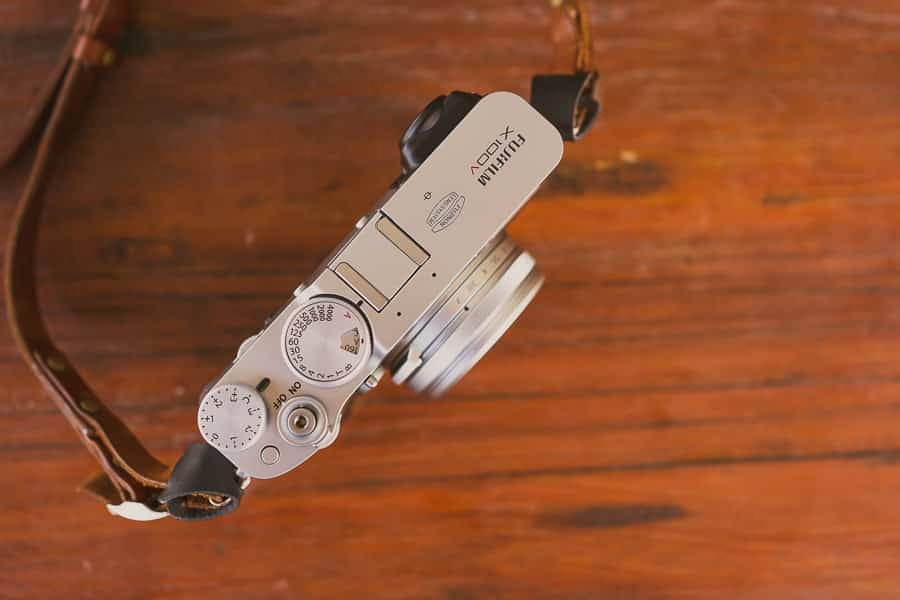
Here's a recommended shooting setup for everyday use:
- Auto white balance (Fujifilm nails this every time)
- Auto ISO with a minimum shutter of 1/200 and max ISO 6400
- Aperture priority with shutter dial set to A
- Wide AF with tracking
- Face and eye detection enabled
- Touch-to-shoot turned on
With exposure compensation set to C, you can dial in brightness using the rear control dial. It's simple, intuitive, and surprisingly effective.
Autofocus Performance
The original X100 had groundbreaking image quality but painfully slow autofocus. The X100S was better. The X100F improved further but still hunted too much. The X100V is the first model in the lineup where the AF is genuinely usable in most real-world scenarios.
Powered by the quad-core X-Processor 4, the X100V offers face and eye detection down to -5EV. While it won't match a Sony a7III in low-light tracking, it's fast enough for street, portrait, and casual shooting. Continuous AF at 11fps burst feels almost excessive for a camera this size, but it works well — just drop it to 6fps to save yourself from culling hundreds of similar shots later.
Manual focus is enjoyable too, with focus peaking and a smooth lens ring that gives you that old-school film camera feel.
Image Quality

Fujifilm's straight-out-of-camera JPEGs have always been best-in-class, and the X100V takes it further. The 26.1 MP X-Trans CMOS 4 sensor combined with the redesigned 23mm f/2 lens delivers sharp, contrasty images even wide open — a notable improvement over previous X100 models where f/2 was soft.
The dynamic range is excellent for an APS-C sensor. You can pull significant detail from shadows in RAW files, though highlight recovery is more limited. And with film simulations like Classic Neg (based on Fujicolor Superia 100 from the 1980s), you can produce beautiful, finished images without ever touching a computer.
Sample Images – Classic Neg Film Simulation
All images below are straight-out-of-camera JPEGs with the Classic Neg simulation applied. No editing, just resize and upload.



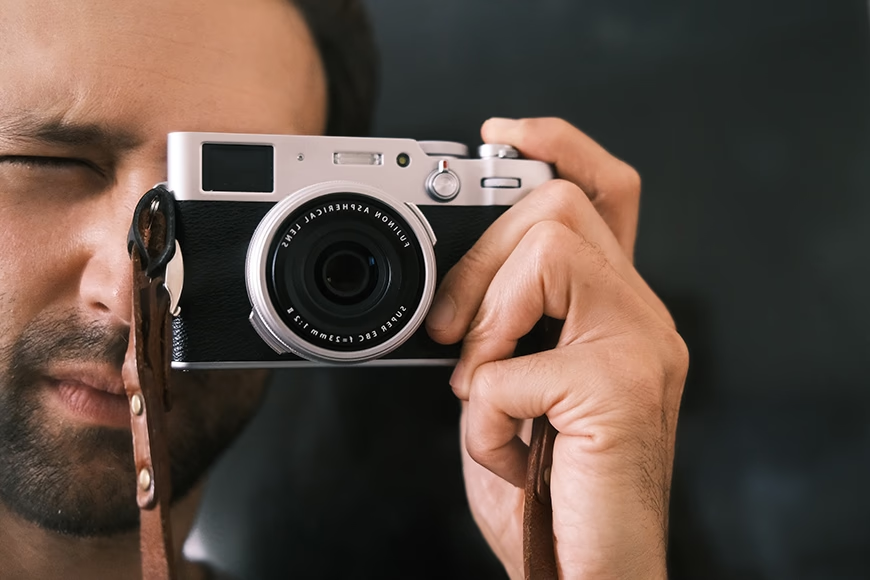

Built-in ND Filter

The built-in 4-stop ND filter is a one-button press away, letting you shoot wide open in bright sunlight or create motion blur effects in flowing water.
High ISO Performance

ISO 4000 remains clean and usable.

ISO 12800 is noisy but usable in a pinch.
Dynamic Range


RAW files offer good shadow recovery, but highlights blow out more quickly.
Unedited vs Edited RAW
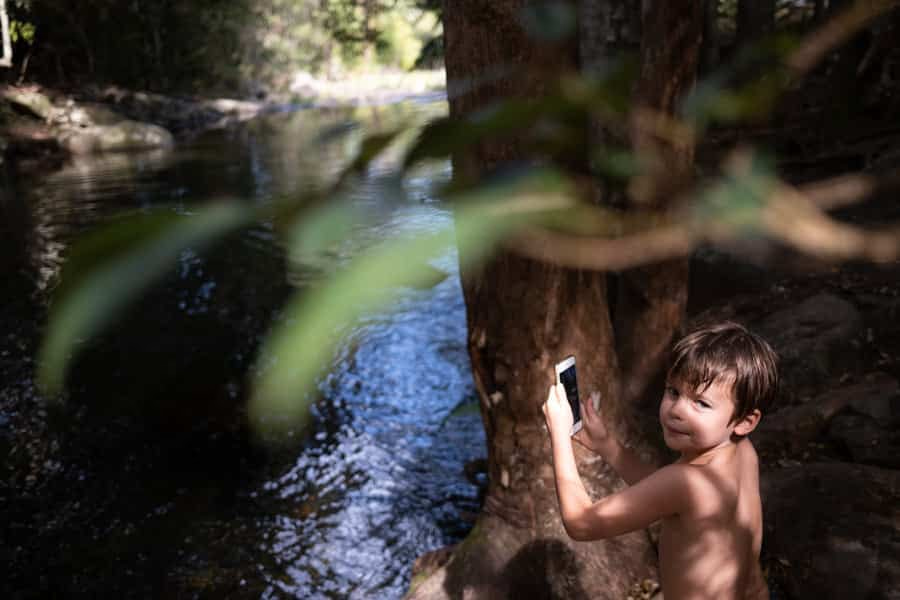


A simple exposure boost and conversion to Adobe Monochrome shows the RAW file's flexibility.
Macro and Close-up

The lens is razor sharp on fine details like eyelashes when shooting up close.
Multiple Exposure
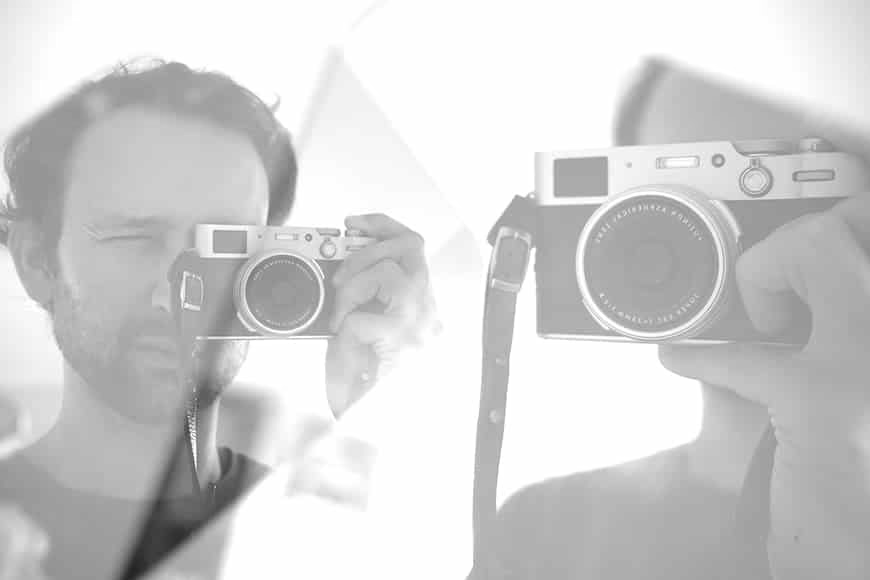
100% Zoom Crop

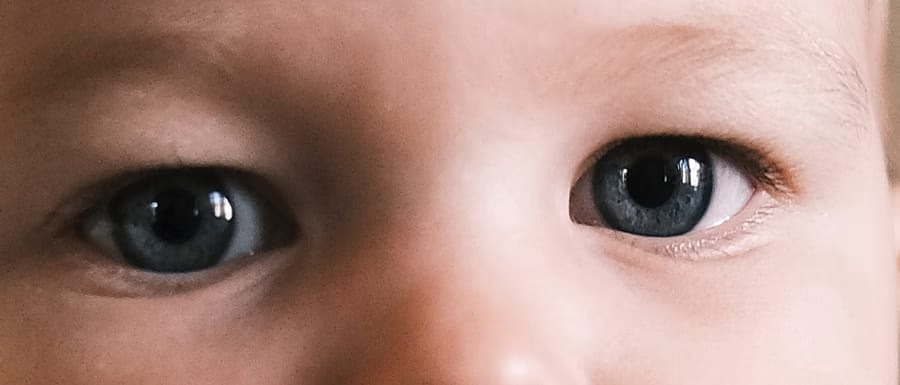
Notice the shallow depth of field at f/2 — the difference between the soft left eye and tack-sharp right eye.
Key Features Worth Highlighting
Advanced Hybrid Viewfinder: The X100V's viewfinder switches instantly between an optical viewfinder (OVF) and an electronic viewfinder (EVF). The OVF is excellent for street photography, letting you see outside the frame to anticipate your subject entering the shot.
Tilting Touchscreen: This was the main reason many X100F users upgraded. It's perfectly integrated and doesn't ruin the camera's clean aesthetic.
Aperture Ring: Twisting the lens ring to control aperture is tactile and satisfying — a small detail that makes the shooting experience more engaging.
4K Video: While not a video-first camera, the X100V records smooth 4K/30p with Fujifilm's ETERNA film simulation, letting you skip colour grading entirely. Just note that the ND filter doesn't work in video mode.
USB-C Charging: USB-C handles both data transfer and charging, which is especially convenient for Mac users.
Fujifilm X100V vs X100F

If you're deciding whether to upgrade from the X100F, here's the short answer: it's worth it. The sharper lens, tilting touchscreen, improved AF, weather sealing (with the filter adapter), and better EVF all add up to a meaningful upgrade.
Key differences at a glance:
- 26 MP vs 24 MP sensor
- Sharper, redesigned 23mm f/2 lens
- Tilting 1.62M-dot touchscreen LCD
- Weather-resistant with filter adapter
- Phase detection AF rated to -5EV vs -3EV
- 4K video at 30fps
- Built-in 4-stop ND filter (up from 3-stop)
- New joystick replaces the d-pad
Practical Tips for the Fujifilm X100V
- Use the film simulations. Classic Neg and ETERNA produce stunning JPEGs straight out of camera, saving you hours in post-processing.
- Add a grip or thumb rest. Since the body lacks rubber texture, a small accessory grip or thumb rest improves handling significantly.
- Invest in the weather sealing kit. The AR-X100 adapter ring and PRF-49 filter are essential if you plan to shoot in rain or dusty conditions.
- Set up the My Menu. Program your most-used settings into My Menu for faster access — it saves scrolling through Fujifilm's deep menu system.
- Use tap-to-shoot for candid shots. The touchscreen lets you compose from the hip or waist without being noticed, perfect for street photography.
Conclusion
The Fujifilm X100V is a genuinely special camera. It delivers excellent image quality, beautiful design, and an engaging shooting experience that reminds you why you fell in love with photography in the first place. The AF is finally good enough for most real-world scenarios, the tilting touchscreen opens up new creative angles, and Fujifilm's film simulations let you produce finished images without opening a computer.
Is it perfect? No. The grip is poor, full weather sealing costs extra, and the AF still hunts in very low light. But if you value the experience of shooting as much as the final image, the X100V is one of the most satisfying compact cameras ever made.
FAQ
Is the Fujifilm X100V good for professional photography?
It can absolutely be used professionally for certain genres like street, travel, and lifestyle photography. However, the lack of a strong grip, single card slot, and slower AF compared to flagship mirrorless cameras make it less suited for fast-paced professional work like sports or event coverage.
Is the X100V weather sealed?
Partially. The body is weather resistant, but the lens is not sealed unless you attach the Fujifilm AR-X100 adapter ring and a PRF-49 filter. Without these, moisture can enter through the lens barrel.
How does the X100V compare to the X100F?
The X100V is a clear upgrade. The lens is sharper, the screen tilts and supports touch, the EVF has higher resolution, autofocus is more reliable, and it offers 4K video and weather sealing (with the adapter). If you have the budget, the upgrade is well worth it.
Can the X100V shoot RAW?
Yes, it shoots Fujifilm's lossless compressed RAW format. The 26 MP files offer good dynamic range for editing, with especially strong shadow recovery performance.
Is the fixed 23mm lens versatile enough for everyday use?
The 23mm lens gives a 35mm equivalent field of view, which is considered one of the most versatile and natural perspectives for everyday, street, and travel photography. It's wide enough for environmental shots and close enough for portraits with pleasing background separation at f/2.