Sigma has never been afraid to do things differently, but the new Sigma 300–600mm f/4 DG OS Sports lens takes that reputation to another level. Designed exclusively for Sony E-mount cameras, this super-telephoto zoom delivers a fixed f/4 aperture across the entire range — a feature normally reserved for prime lenses. It is, by any measure, a daring piece of optical engineering. And as early reviews confirm, it actually works brilliantly in the field.
Whether you shoot birds in flight, big game on safari, or athletes on the sidelines, this lens promises pro-level brightness with the versatility of a zoom. Here is a closer look at what makes it stand out, where it falls short, and whether it deserves a spot in your camera bag.
Built Like a Tank, Handles Like a Pro
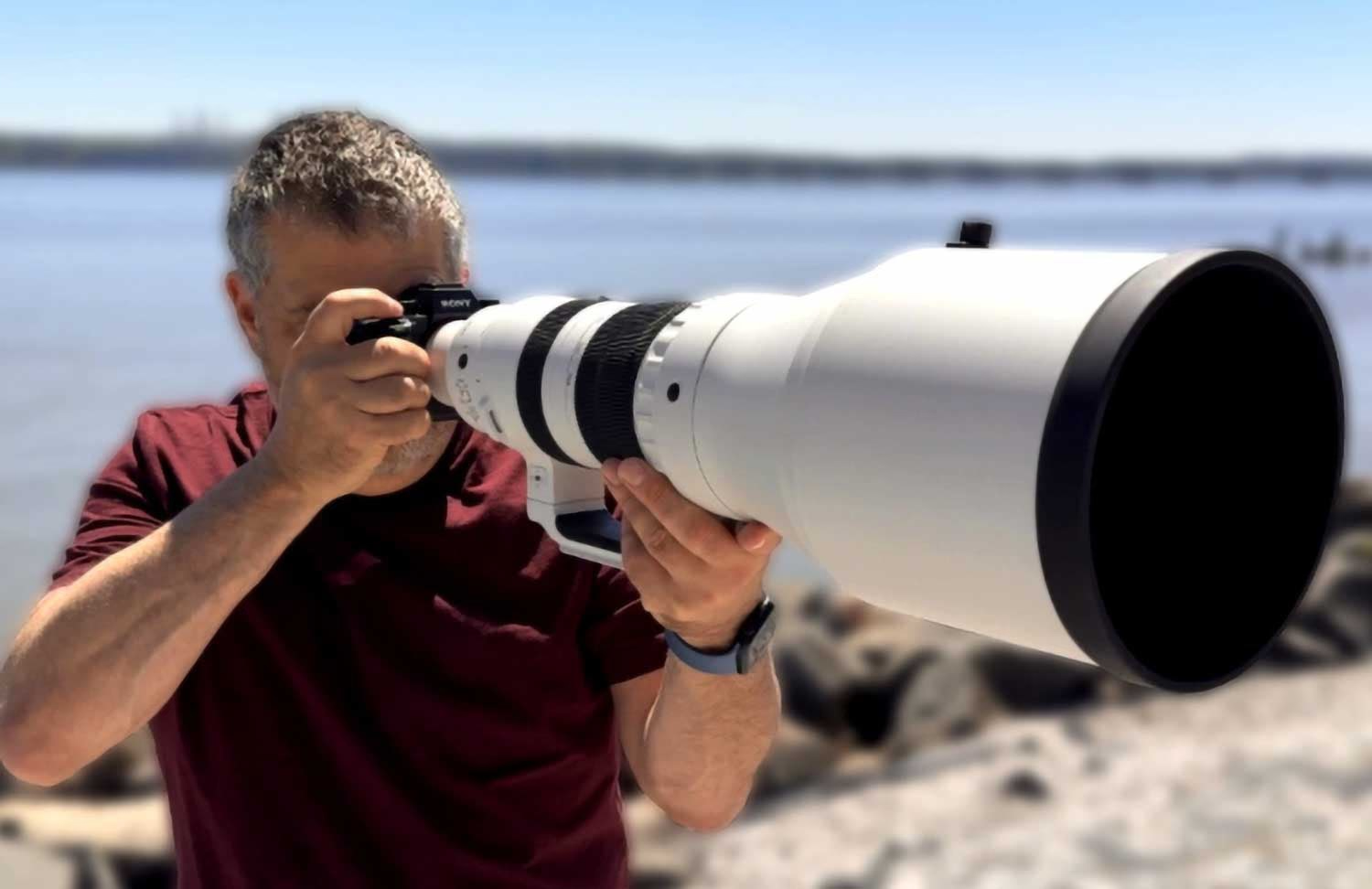
The first thing you notice about the Sigma 300–600mm f/4 is the build quality. The barrel is constructed from magnesium alloy, keeping weight just under four pounds while ensuring durability that can handle real-world abuse. Fully weather-sealed, this lens is ready for misty mornings, dusty trails, and unpredictable outdoor conditions.
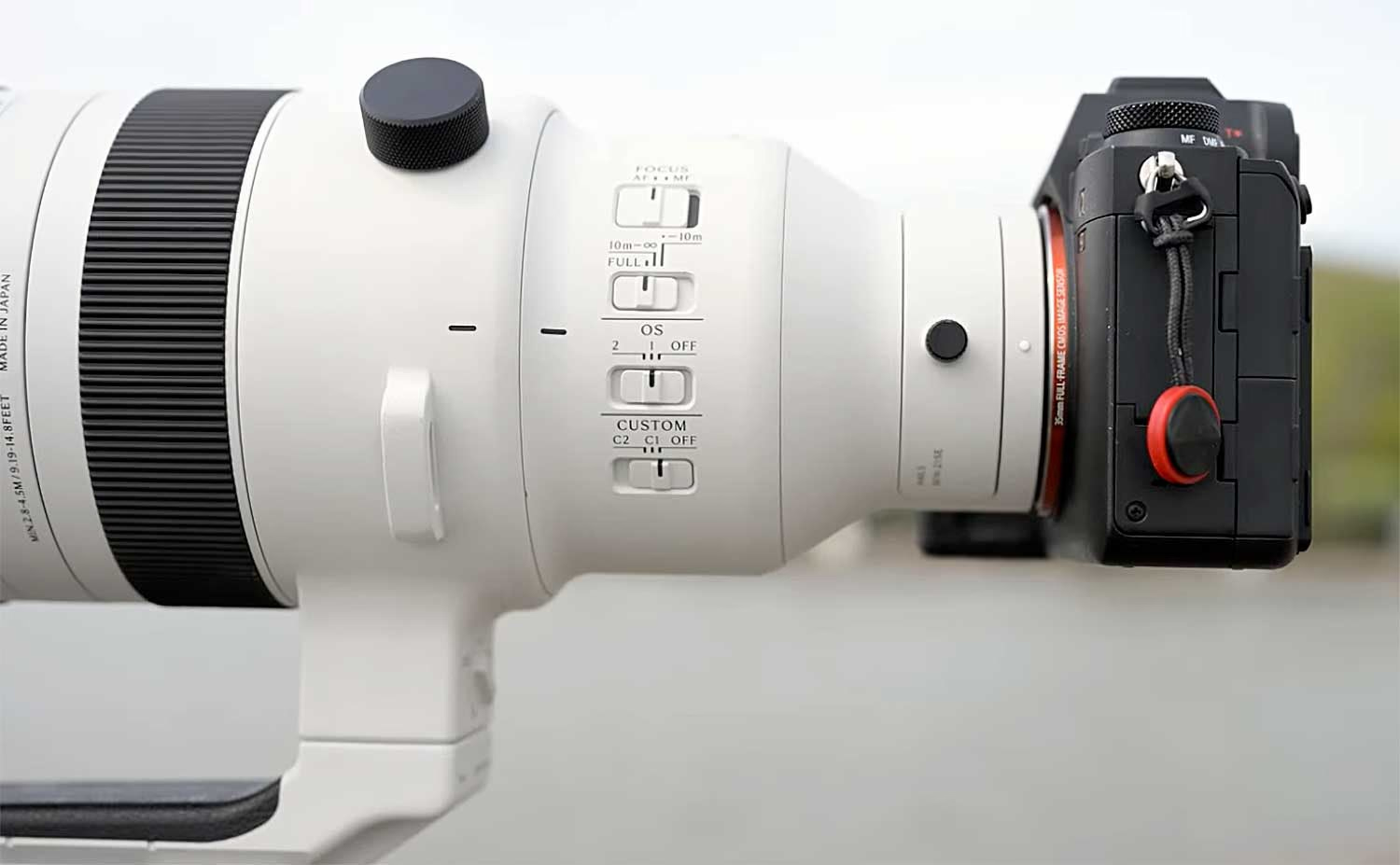
Ergonomically, it is designed for working pros. The control rings are large and glove-friendly, making adjustments easy even in cold weather. There is a rotating function switch, four focus lock buttons spaced evenly around the barrel, and a drop-in filter slot at the rear — a rare and welcome feature on modern telephoto zooms. Attach the oversized hood and this lens looks like it belongs on the front of a camera at the Olympics or in a blind in Alaska.
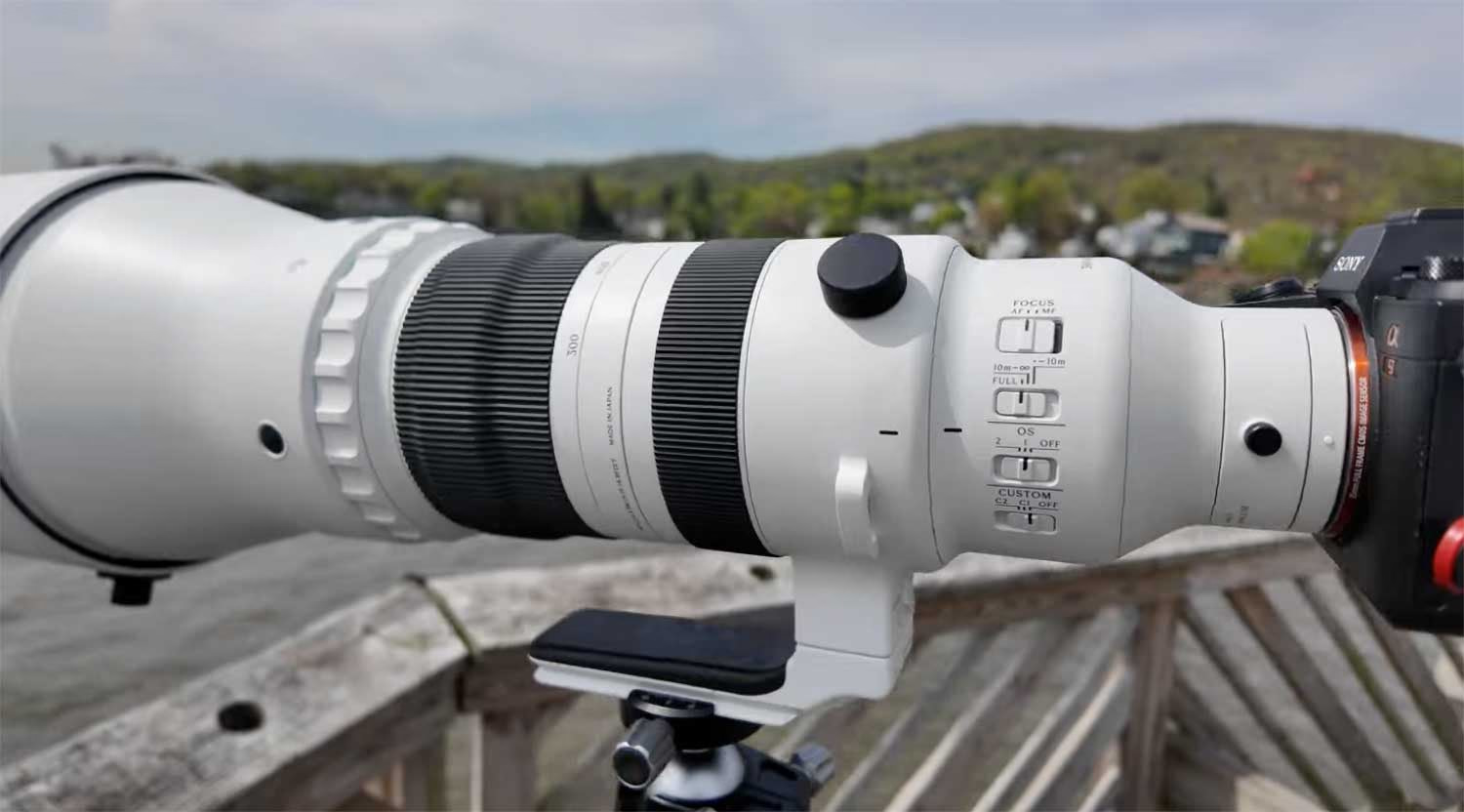
Image Quality That Delivers
Optically, the Sigma 300–600mm f/4 is a stunner. The constant f/4 aperture provides beautiful subject separation and strong low-light performance — something you simply cannot get from variable-aperture zooms like Sony's 200–600mm f/5.6–6.3 or the 400–800mm f/6.3–8 G.
Edge-to-edge sharpness is excellent even wide open, chromatic aberration is well controlled, and the optical stabilization is highly effective. Sigma rates it at 5.5 stops of shake reduction, and in real-world use, handheld shooting is entirely practical. For wildlife photographers who need to react quickly without setting up a tripod, that is a huge advantage.
Where the Sigma Compromises
No lens this ambitious comes without trade-offs. The most notable limitation is that autofocus does not remain active while zooming. For fast-moving subjects — think birds taking off or race cars screaming past — this can be frustrating. Additionally, on Sony cameras, the lens caps burst shooting at 15 fps, well below what bodies like the Sony A9 III can achieve. The reason is simple: Sony does not share its full AF protocol with third-party lens makers.
Another missing feature is compatibility with Sony's teleconverters. While some photographers prefer to crop from high-resolution sensors, others will miss the extra reach that a teleconverter provides.
Pricing and Value
At $6,000, the Sigma 300–600mm f/4 is positioned right between Sony's consumer-grade 200–600mm f/5.6–6.3 (around $2,000) and the flagship 600mm f/4 G Master prime (around $13,000). It punches well above its price bracket in terms of image quality and build, offering near-G Master performance at roughly half the cost.
For wildlife, aviation, and sports shooters who can work around its limitations, this lens represents one of the most compelling value propositions in the super-telephoto category today.
Practical Tips for Shooting with the Sigma 300–600mm f/4
- Pre-focus before zooming. Since autofocus pauses during zoom adjustments, lock focus first, then zoom to recompose if your subject is moving predictably.
- Use a gimbal head for long sessions. Even under four pounds gets heavy after hours of handheld shooting. A good gimbal head helps you track subjects smoothly.
- Leverage the drop-in filter slot. Use a circular polarizer or variable ND for in-camera exposure control, especially for birds in flight against bright skies.
- Stay within the 15 fps limit. Plan your bursts carefully. The burst rate is slower than native Sony lenses, so timing your shots matters more.
- Crop instead of using teleconverters. With a high-resolution body like the Sony A7R V or A1, cropping in post gives you usable reach without the AF slowdown that teleconverters introduce.
Conclusion
The Sigma 300–600mm f/4 DG OS Sports is a lens that should not exist on paper — a constant-aperture super-telephoto zoom that competes with primes and zooms alike. It has real limitations, particularly around AF behavior during zooming and third-party burst speed caps. But for photographers who prioritize image quality, build, and value, this lens is a genuine game-changer. As one reviewer put it, this is the lens Sony should have made. Sigma made it instead — and that is excellent news for wildlife photographers.
FAQ
Is the Sigma 300–600mm f/4 compatible with Sony teleconverters?
No, the Sigma 300–600mm f/4 does not support Sony's teleconverters. If you need extra reach, the best workaround is to shoot with a high-resolution camera body and crop in post-production.
Can you shoot handheld with the Sigma 300–600mm f/4?
Yes. The lens weighs under four pounds and features effective optical stabilization rated at 5.5 stops. Handheld shooting is very practical, especially with proper technique and support like a monopod for longer sessions.
How does the Sigma 300–600mm f/4 compare to the Sony 200–600mm?
The Sigma offers a constant f/4 aperture with superior low-light performance and image quality, while the Sony 200–600mm has variable aperture and a slightly longer reach. The Sigma is also significantly more expensive at $6,000 versus roughly $2,000, but delivers much closer to prime-level results.
Does the Sigma 300–600mm f/4 work on Nikon or Canon cameras?
Currently, the Sigma 300–600mm f/4 DG OS Sports is designed exclusively for Sony E-mount cameras. There is no official word on other mounts at this time.
What is the maximum burst rate with the Sigma 300–600mm f/4 on Sony cameras?
The lens supports up to 15 fps burst shooting on Sony bodies, regardless of the camera's native capability. This is due to Sony's proprietary AF protocol not being fully available to third-party manufacturers.