DJI has officially pulled the curtain back on the highly anticipated Osmo Pocket 4P, choosing the prestigious Cannes Film Festival as the stage for its big reveal. While leaks and rumors had already given much of the design away, this announcement marks a clear turning point for the Pocket series — one that pushes it from a creator-focused gimbal camera into something DJI is openly calling a "cinematic imaging device."
If you have been following the gimbal camera space, this launch is significant. The Osmo Pocket line has long dominated the pocket-sized stabilized camera category, but the new 4P signals a direct push toward filmmakers, documentary creators, and serious visual storytellers. Here is what we know so far and what it means for photographers and videographers.
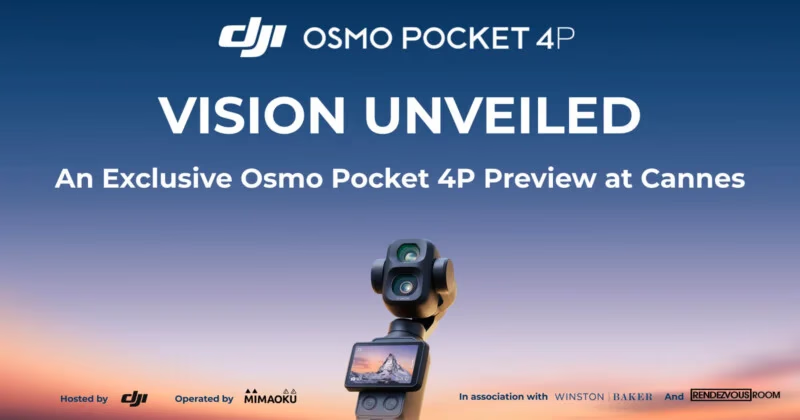
A Dual-Lens Design Built for Cinematic Storytelling
The headline feature of the Osmo Pocket 4P is its dual-camera system, a first for the Pocket line. Where previous Osmo Pockets relied on a single lens mounted on a 3-axis gimbal, the 4P adds a second camera module — most likely to enable optical zoom flexibility and creative framing options without sacrificing image quality.
DJI has positioned the 4P as a step above the recently announced Osmo Pocket 4, drawing on engineering lessons from its higher-end Ronin gimbal systems and Inspire cinema drones. The company describes the camera as a convergence of high-end film technology and extreme portability, which is a notable shift in marketing language. The focus is no longer "content creator," but "filmmaker" and "documentary professional."
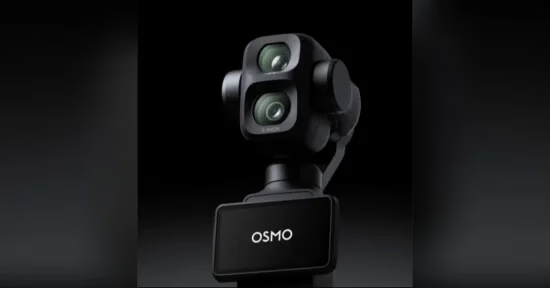
True 10-Bit D-Log2 and Cinematic Dynamic Range
One of the most exciting technical claims is full 10-bit D-Log2 color recording. For videographers, this is a meaningful upgrade. D-Log2 is the same flat color profile used on DJI's higher-tier cinema cameras, designed to preserve maximum dynamic range and tonal information for color grading in post-production.
True 10-bit recording captures over a billion colors compared to roughly 16.7 million in 8-bit, which translates into smoother gradients, cleaner skin tones, and far more flexibility when pushing exposure or color in the edit. For a pocket-sized camera, this is genuinely impressive and puts the 4P in a different league than typical vlogging cameras.
DJI also highlights "rich tonal depth" and "cinematic-level dynamic range," suggesting the sensor and image pipeline have been retuned to retain detail in both highlights and shadows — a critical feature for run-and-gun documentary work where lighting cannot always be controlled.
Type 1 Sensor and Improved Low-Light Performance
The Osmo Pocket 4P uses at least one Type 1 (1-inch) sensor, the same general sensor class found in the Osmo Pocket 3. DJI emphasizes refined portrait capabilities for more natural skin tones, an improved zoom system, and new algorithms tuned specifically for low-light shooting.
That last point matters. The Pocket 3 already performed well in challenging light, and if the 4P meaningfully improves on that, it becomes a serious tool for travel videographers, wedding shooters needing a B-camera, and journalists who often shoot in unpredictable conditions.
Who the Osmo Pocket 4P Is For
DJI's Cannes presentation made the target audience clear. The Osmo Pocket 4P is being explored by:
- Independent filmmakers needing an agile B-camera or stealthy main camera
- Documentary creators working in tight or unpredictable environments
- Travel videographers who want pro image quality without bulk
- Visual storytellers shooting branded content or short-form cinematic pieces
Because the camera is built around a 3-axis gimbal, it produces stabilized footage that requires no rig, no separate stabilizer, and no extensive setup. That makes it ideal for shooting in markets, on trains, in moving vehicles, or anywhere a full cinema rig would be impractical or attract unwanted attention.
Powering the Pocket 4P for Long Shoots
Interestingly, DJI showcased the Osmo Pocket 4P alongside its larger DJI Power 1000 and DJI Power 2000 portable battery stations. While that pairing might seem oversized for a pocket camera, it hints at intended use cases such as long timelapse sessions, all-day documentary shoots, or interview setups where uninterrupted recording is essential. For solo filmmakers working in remote locations, having scalable power options matters.
What DJI Has Not Said Yet
This is a soft launch, and DJI is holding back many details. The company has not confirmed:
- A specific release date
- Final pricing tiers
- Exact specifications for the second lens (focal length, aperture, sensor size)
- Maximum video resolution, frame rates, and bitrates
- Internal storage capacity and recording media
DJI has only said the camera will be sold "through DJI's official channels and authorized retail partners," with pricing announced later.
Practical Tips for Pocket Gimbal Cinematography
Whether you are planning to upgrade to the Pocket 4P or shooting with an existing Pocket-style gimbal camera, these tips will help you get the most cinematic results:
- Shoot in D-Log or D-Log2 when possible. Even though it looks flat straight out of camera, the extra dynamic range gives you far more flexibility to color grade.
- Use slow, intentional movements. Gimbal cameras shine when you walk smoothly and avoid jerky pans. Heel-to-toe walking dramatically reduces residual bounce.
- Lock to specific frame rates. For cinematic motion, stick with 24 or 25 fps. Save 60 fps and higher for slow-motion shots you plan to retime in post.
- Watch your exposure for skin tones. Slightly underexposing protects highlights, but skin tones should never be crushed. Use zebras or a histogram to keep faces in the sweet spot.
- Pair it with external power. For long takes, plug into a power bank via USB-C to extend recording time without swapping batteries.
Conclusion
The DJI Osmo Pocket 4P is shaping up to be the most ambitious entry in the Pocket lineup so far. By introducing a dual-camera system, true 10-bit D-Log2 recording, and explicit cinema-focused marketing, DJI is signaling that the Pocket series has matured into a genuine professional tool. Even with key details still under wraps, the announcement makes it clear that pocket-sized cinema is no longer a niche curiosity — it is a category DJI intends to lead.
FAQ
What is the main difference between the Osmo Pocket 4 and the Osmo Pocket 4P?
The Pocket 4P is positioned as a higher-tier model with a dual-camera system, true 10-bit D-Log2 color, and refinements aimed at filmmakers rather than general content creators. The Pocket 4 remains the more accessible everyday creator option.
Is true 10-bit D-Log2 worth it for casual shooters?
If you do not color grade your footage, you may not see a major day-to-day benefit. However, 10-bit D-Log2 future-proofs your footage and gives much better results when you do edit, especially for skin tones, sunsets, and high-contrast scenes.
Will the Osmo Pocket 4P replace a mirrorless camera for video?
Not entirely. A mirrorless camera still offers larger sensors, interchangeable lenses, and better low-light performance overall. But the Pocket 4P is a strong B-camera or travel-friendly main camera when stabilization and discretion matter more than raw sensor size.
When will the DJI Osmo Pocket 4P be available?
DJI has not announced a specific release date or final pricing. The company says the camera will launch through official DJI channels and authorized retailers, with more details to follow.
Is the Osmo Pocket 4P good for vlogging?
Yes, it should be excellent for vlogging. The 3-axis gimbal eliminates handheld shake, the dual-camera setup adds framing flexibility for selfie and wide angles, and the cinematic color profiles give your videos a more polished, professional look straight out of camera.