When Peak Design launched the original Everyday Backpack via Kickstarter back in 2015, it quickly became an icon in the photography world. Fast forward a few years, and the California-based company decided it was time for a refresh. As someone who counts the 20L Everyday Backpack among the favorites in my collection of camera backpacks, I had to find out whether the V2 truly improved on an already beloved design — so I bought one and put it through months of real-world use.
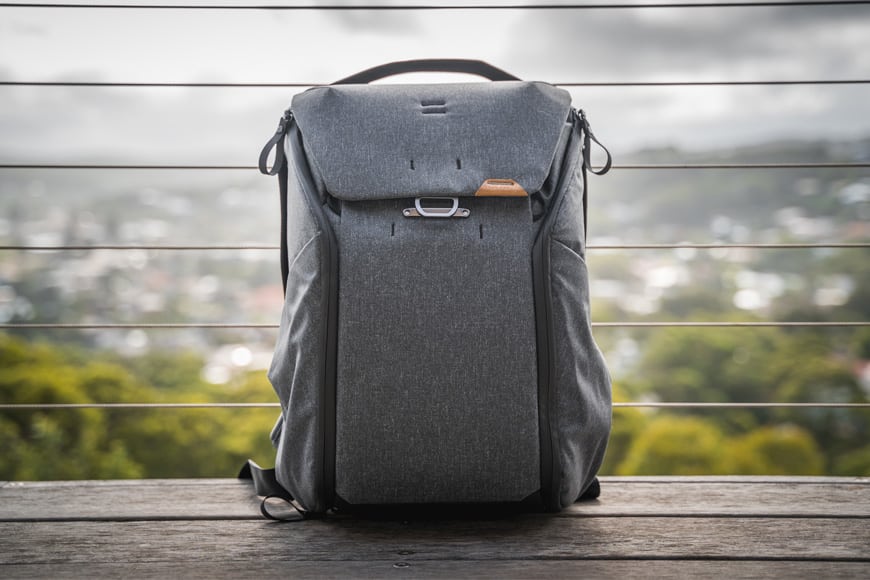
Build Quality and Appearance
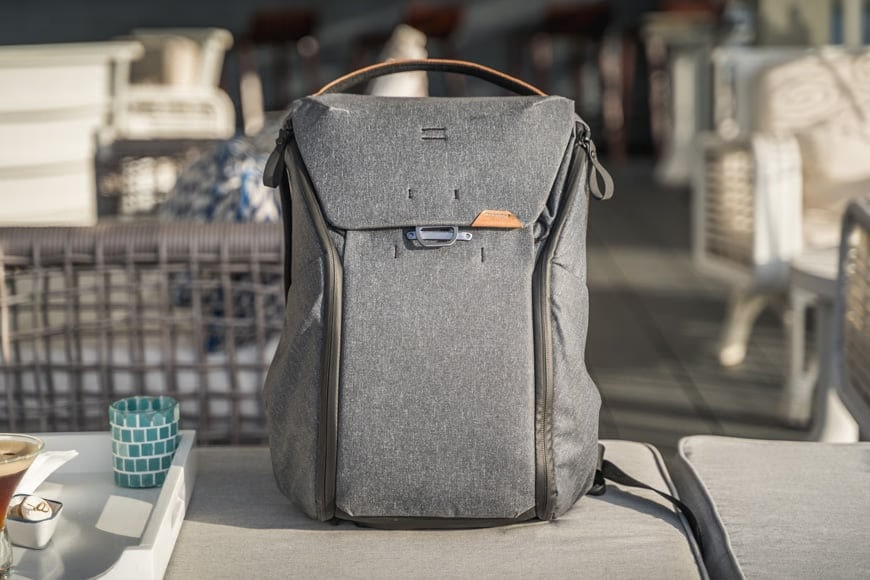
The Everyday Backpack V2 carries forward the sleek, modern silhouette that made the original so recognizable. The outer shell uses 100% recycled 400D double poly-coated DWR-impregnated nylon canvas — tough enough to handle rain, hail, or shine. If you opt for the Charcoal, Ash, or Midnight colorways, those fabrics are Bluesign approved as well. The rigid structure never sags, and the combination of the signature MagLatch top closure and weather-sealed UltraZips gives the bag its distinctive rounded profile.
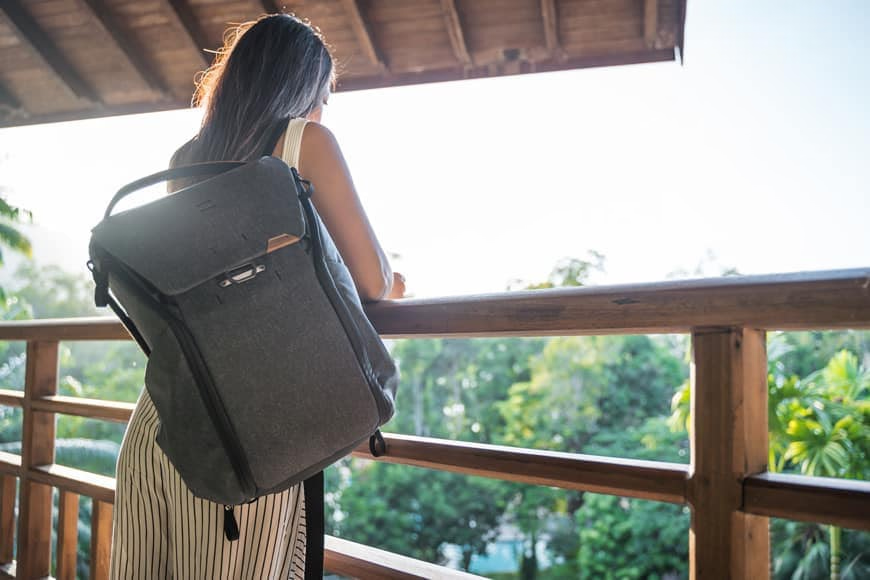
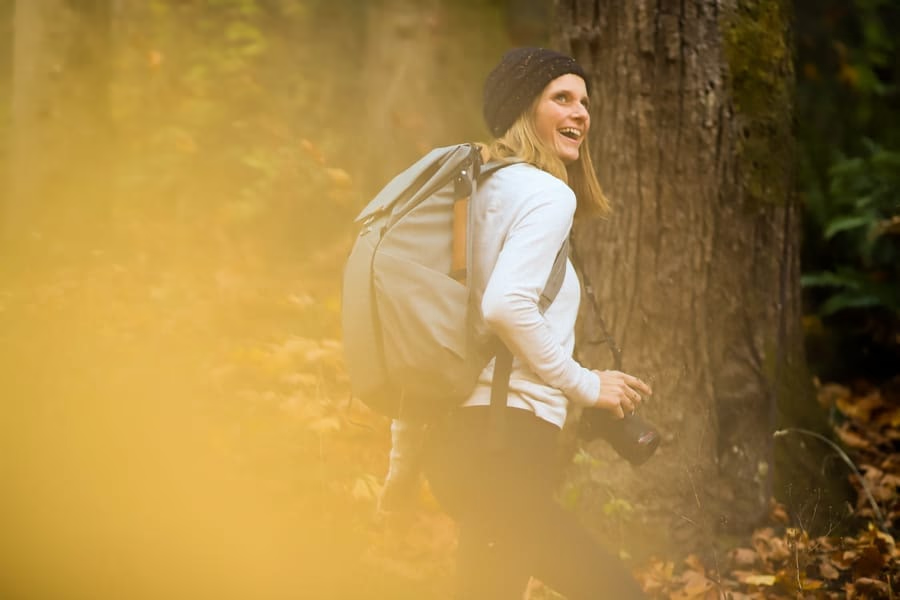
What I appreciate most is that this bag doesn't scream "camera bag." It looks just as appropriate in a coffee shop or on a commute as it does on a hiking trail. That versatility is hard to find.
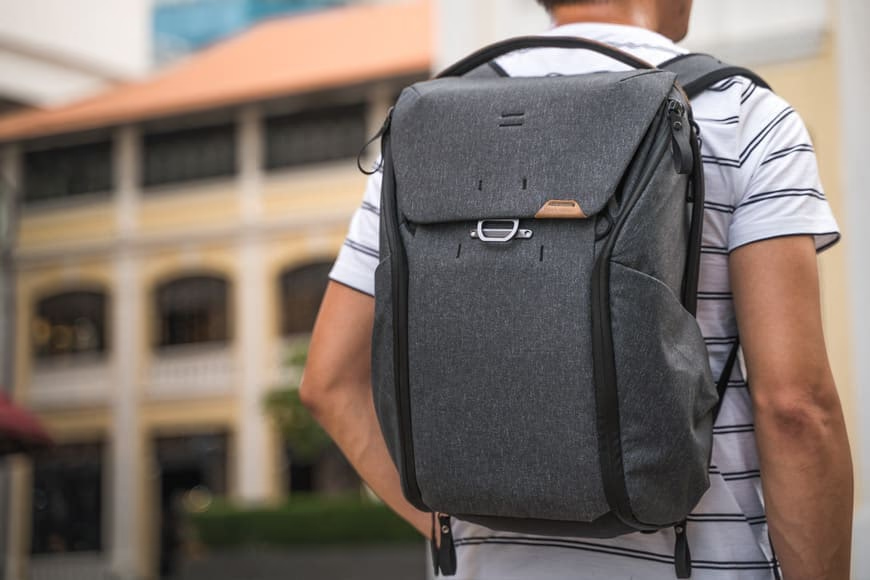
Exterior Features Worth Noting
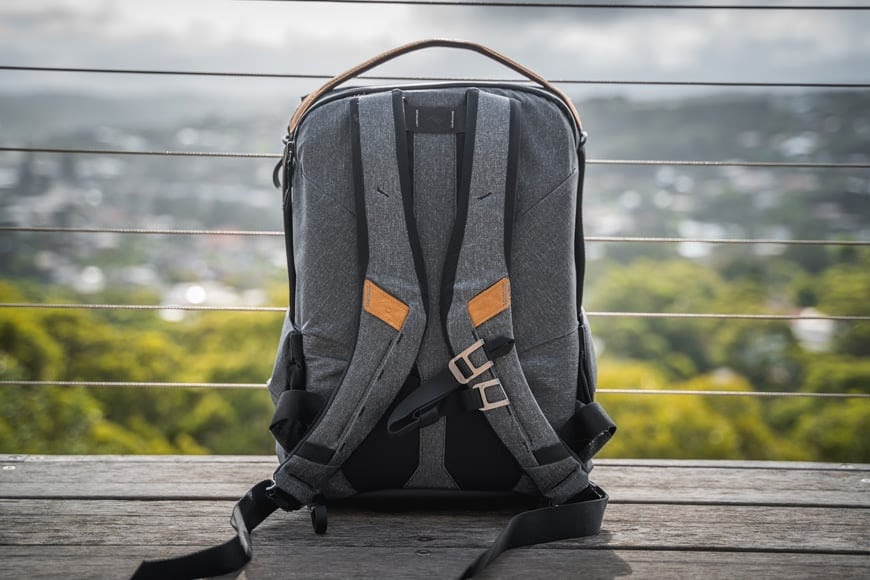
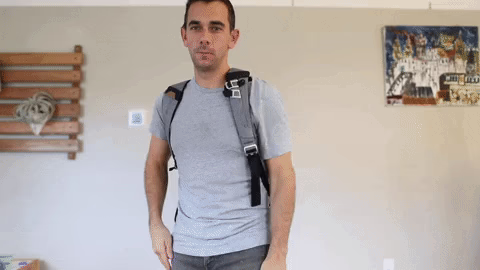
The V2's shoulder straps have been redesigned with better padding and a more ergonomic shape. They still pivot on axial attachment points, so they naturally conform to your body. Magnets tucked into the back panel keep the straps flat against the bag when you're packing it up — a small touch that makes a real difference. A sternum strap is included, and your Peak Design Capture Clip (sold separately) still attaches securely.
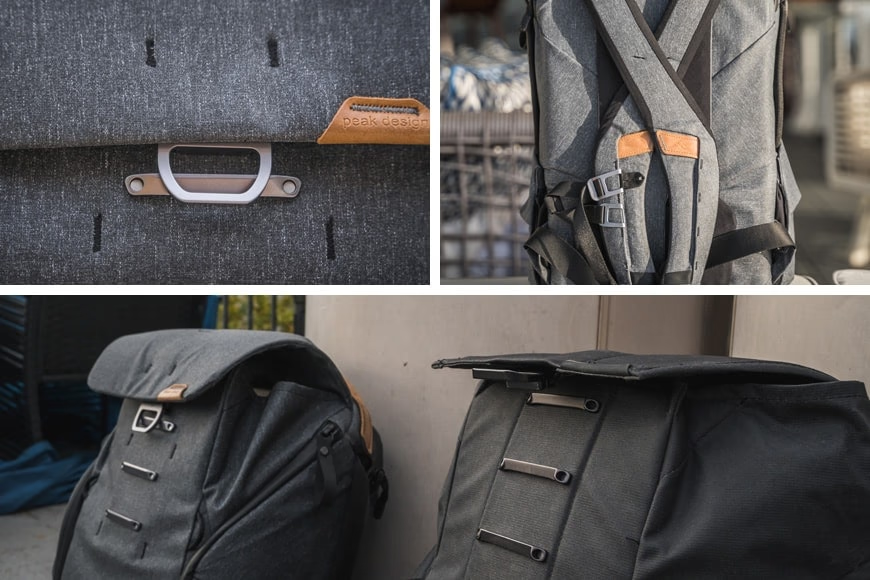
The MagLatch system has seen one of the most meaningful upgrades. On the V1, I frequently had the latch pop open when the bag was packed to the brim. The V2 fixes this — the magnetic hold is noticeably stronger, and the latch stays locked even at maximum capacity. This alone makes the update worthwhile for anyone who regularly loads the bag to its limits.
However, there is one disappointment: the waist strap is no longer included. It was cleverly hidden inside the side pockets on the V1, and I used it far more often than the sternum strap. Peak Design now sells it separately. For a bag at this price point, that stings a little.
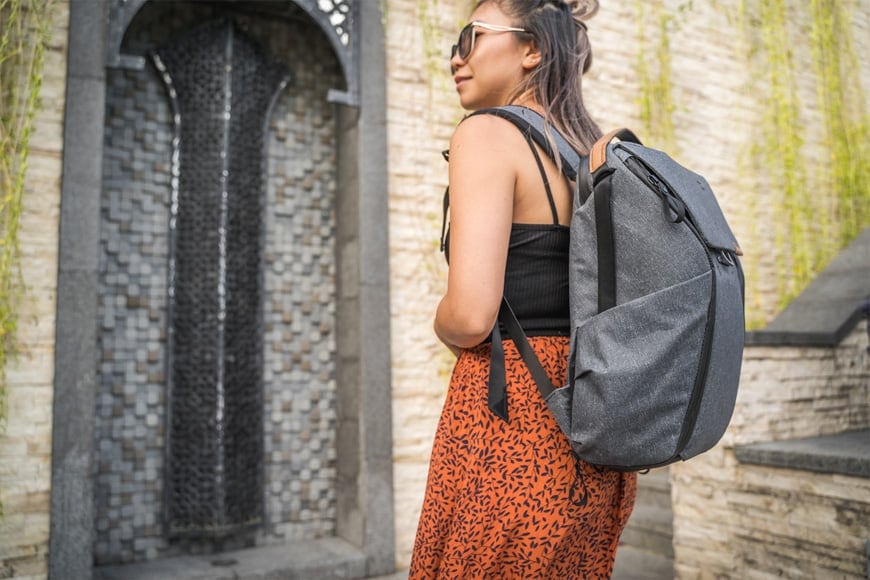
You still get the large top grab handle with leather accents (or Hypalon on the black model), plus two side handles that let you carry the bag briefcase-style. The expandable side pockets are great for a water bottle, umbrella, or even a compact tripod.
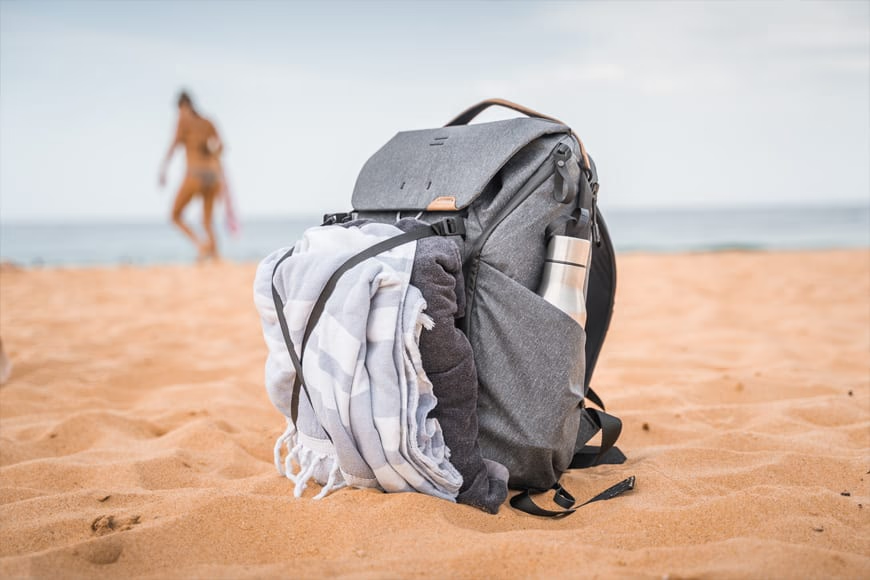
Eight external hook points, combined with the four included Cord Hook straps, let you lash bulky items to the outside — think a jacket, tripod, or beach towel.
Interior Organization and FlexFold Dividers
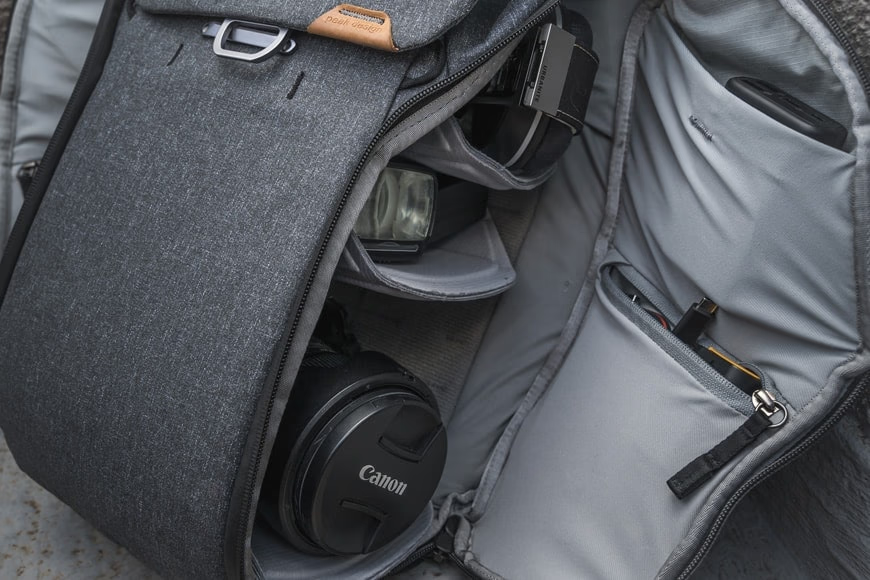
The V2 comes with three FlexFold dividers, which remain the most intuitive camera bag dividers I have ever used. You can flip up sections to cradle smaller items or lay them flat for longer lenses. Peak Design has added a stitched vertical guide inside the bag, making it easier to align the dividers properly.
The interior side pockets have been simplified compared to the V1. Instead of multiple small compartments of varying sizes, you now get two larger magnetic pouches and two smaller zip pockets. I appreciated the granular organization of the V1, and losing that took some getting used to. That said, not having to unzip two layers to grab a cable is genuinely more convenient.
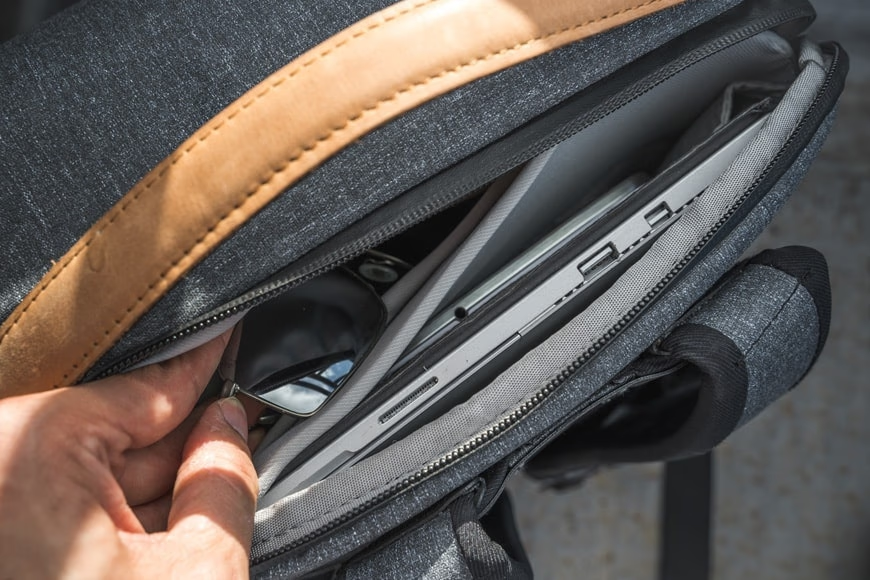
The laptop compartment now features an adjustable sleeve held by Velcro. If you carry a smaller laptop, you can raise the floor so it doesn't sink to the bottom. A separate tablet sleeve and a soft top pouch for sunglasses or delicate items round out the storage. Peak Design also added two small pouches inside the laptop access area for coins, keys, or earbuds — a thoughtful improvement.
What Can You Actually Fit?
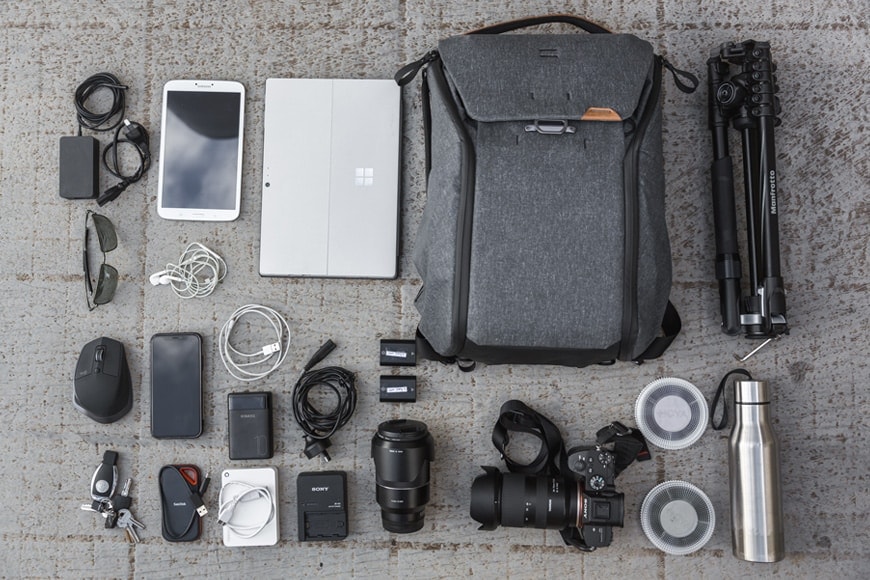
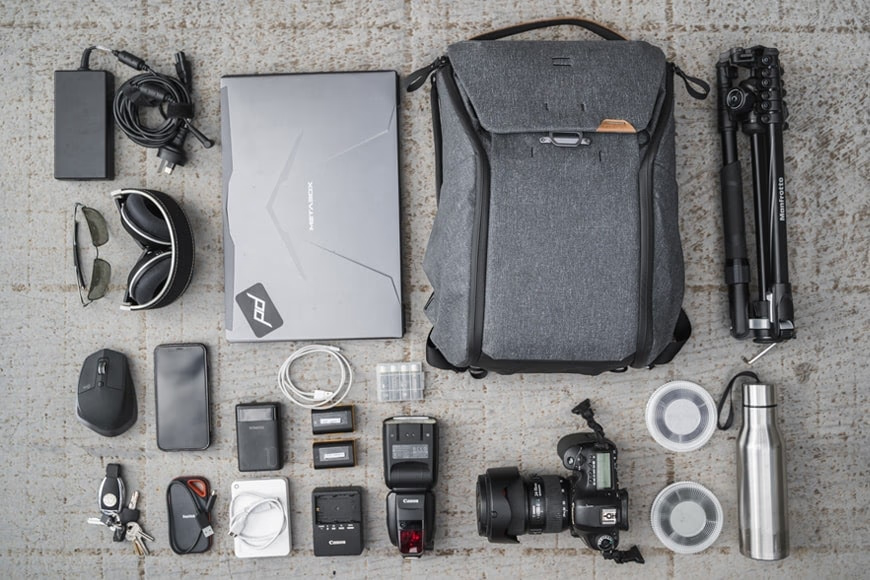
In the 20L version, I have comfortably carried a Sony a7 III with a Tamron 28-75mm f/2.8 attached, a battery pack, my lunch, and a light sweater on top — all with room to spare. You can fit a full-size DSLR like a Canon 5D Mark III with a 24-70mm f/2.8, a flash, chargers, a laptop, and a tablet. Switch things around and you can carry a DJI Mavic drone with batteries, controller, and still have space for a mirrorless body.
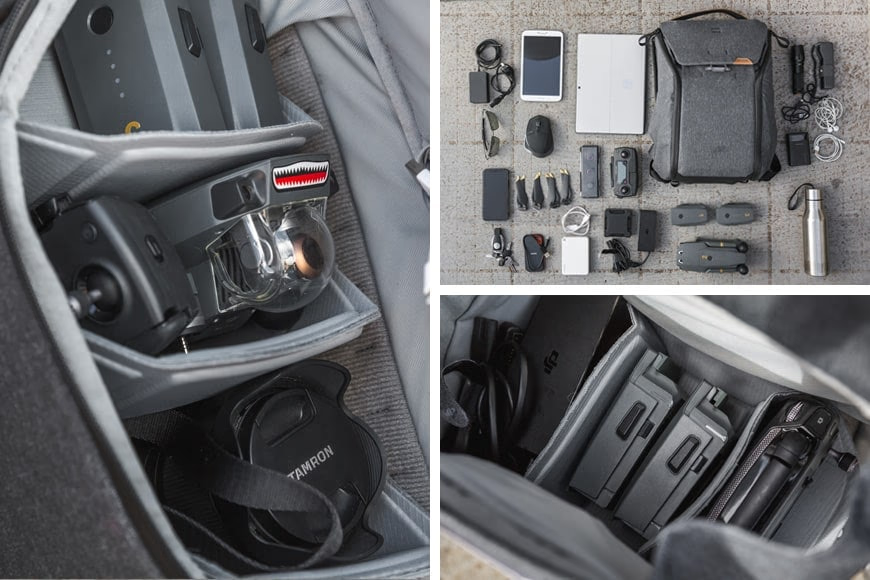
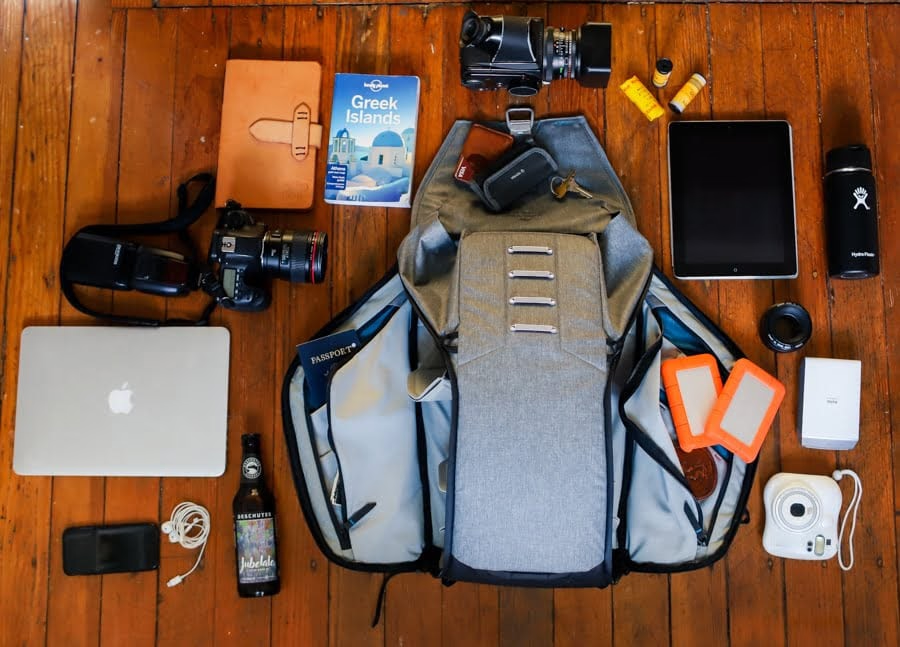
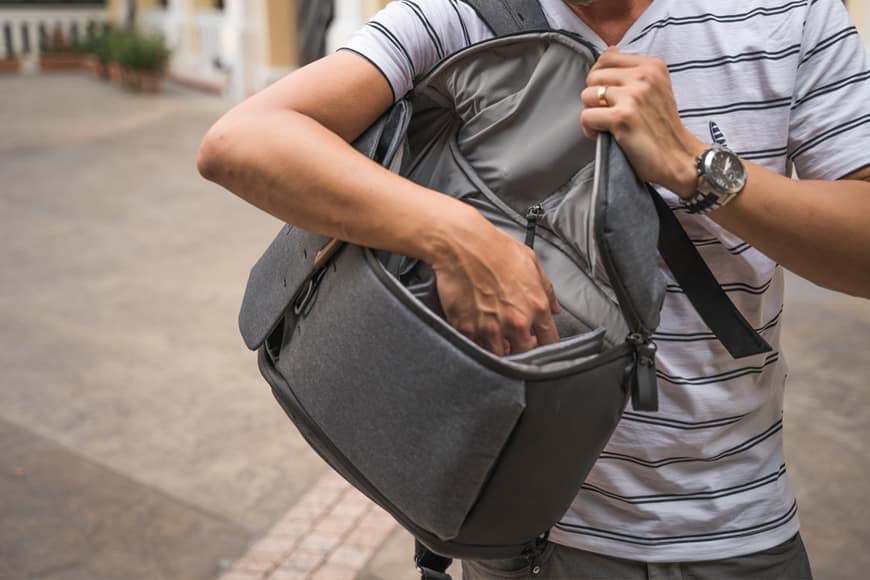
If you need more room, the 30L variant can handle a serious kit for travel while still fitting within most airline carry-on limits. The side access remains one of the bag's best features — you can swing it around, unzip a side panel, and grab your camera without setting the bag down.
Comfort During Extended Use
At 2.01 kg (4.43 lbs) with all three dividers installed, the Everyday Backpack V2 is not the lightest bag out there. But here is the surprising part: it does not feel heavy when worn. I attribute this to the way the shoulder straps distribute weight and how the bag sits against your back. After months of daily commuting and several trips, I have never found the weight uncomfortable during prolonged use.
The zippers glide smoothly without snagging, and having three large access points — both sides and the top — makes packing and retrieving gear effortless. The bag always stands upright when placed on the ground, though it does tilt forward slightly in a way that takes some getting used to.
Is It Worth the Price?
The Everyday Backpack V2 demands a premium price, and for good reason — it uses premium materials, carries a lifetime warranty, and delivers a level of versatility that few camera bags match. If you already own the V1, whether the upgrade is worth it depends on your priorities. The improved MagLatch and more comfortable shoulder straps were enough to justify the switch for me. If those features do not bother you on your current bag, you can comfortably skip this generation.
If you do not already own one, the V2 is an easy recommendation. It looks great, it is built to last, and it genuinely works for nearly every scenario — from office commutes to landscape photography outings.
Practical Tips
- Use the MagLatch positions wisely. The latch closes at different heights depending on how full the bag is. Load tight, then latch lower for a clean look.
- Maximize the Cord Hook straps. They are not just for tripods — strap a jacket, yoga mat, or shopping bag to the outside when you need extra capacity.
- Adjust the laptop sleeve immediately. If you carry a smaller laptop, raise the Velcro floor so it stays accessible rather than sinking to the bottom.
- Experiment with divider orientations. Flipping up a divider wall creates a perfect nook for stacking batteries, filters, or small primes.
- Use both side access points when packing. Open both sides at once to rearrange your loadout far more efficiently.
Conclusion
The Peak Design Everyday Backpack V2 refines an already outstanding camera bag rather than reinventing it. The stronger MagLatch and more comfortable shoulder straps are genuine improvements, while the removal of the waist strap and simplification of interior pockets may frustrate longtime V1 users. For newcomers, this is one of the most versatile, well-built, and stylish camera bags money can buy. It earns its place as a daily driver not just for photographers, but for anyone who values thoughtful design and a bag that adapts to whatever the day throws at it.
FAQ
Is the Peak Design Everyday Backpack V2 worth upgrading from the V1?
It depends on your priorities. The V2 offers a noticeably stronger MagLatch, more comfortable shoulder straps, and a slightly refined top pocket layout. If your V1 latch never bothers you and you rely on the built-in waist strap, the upgrade may not feel essential. If you want better comfort and a more secure closure when fully loaded, it is a worthwhile step up.
Can the 20L Everyday Backpack V2 fit a full-frame DSLR with a 70-200mm lens?
Yes, but it depends on how you configure the FlexFold dividers. A 70-200mm f/2.8 mounted on a full-frame body will fit horizontally if you adjust the dividers to create a longer compartment. You may need to remove one divider to make it work comfortably.
Is the Everyday Backpack V2 comfortable for all-day wear?
Despite weighing around 2 kg with dividers, the bag distributes weight well thanks to the pivoting shoulder straps and padded back panel. Most users, including myself, find it comfortable for extended daily use. If you are carrying very heavy loads for long hikes, adding the optional waist strap is recommended.
Does the Everyday Backpack V2 work as a non-camera everyday bag?
Absolutely. Remove the dividers and you have a clean, minimalist 20L or 30L backpack. The laptop compartment, tablet sleeve, and top quick-access pocket make it excellent for commuting, travel, or just carrying daily essentials. This is one of its strongest selling points.
How weatherproof is the Everyday Backpack V2?
The 400D nylon canvas shell is DWR-impregnated and double poly-coated, and the zippers are weather-sealed UltraZips. It handles rain and splashes confidently. It is not fully submersible, but for typical outdoor photography in wet conditions, your gear will stay dry.