The Sony a6400 has earned its place as one of the most talked-about mirrorless cameras on the market, and for good reason. With its lightning-fast autofocus, compact body, and impressive image quality, it has captured the attention of hobbyists and traveling photographers alike. But how does it actually hold up under real-world shooting conditions?
I spent two weeks putting this camera through its paces — shooting a wedding, a studio portrait session, and using it as a daily carry camera for family and travel photography. My wife and business partner Lindsay also assisted with testing and modeling. Despite Portland's famously rainy weather, we managed to evaluate the a6400 across multiple lighting scenarios and shooting situations. Here's everything you need to know.
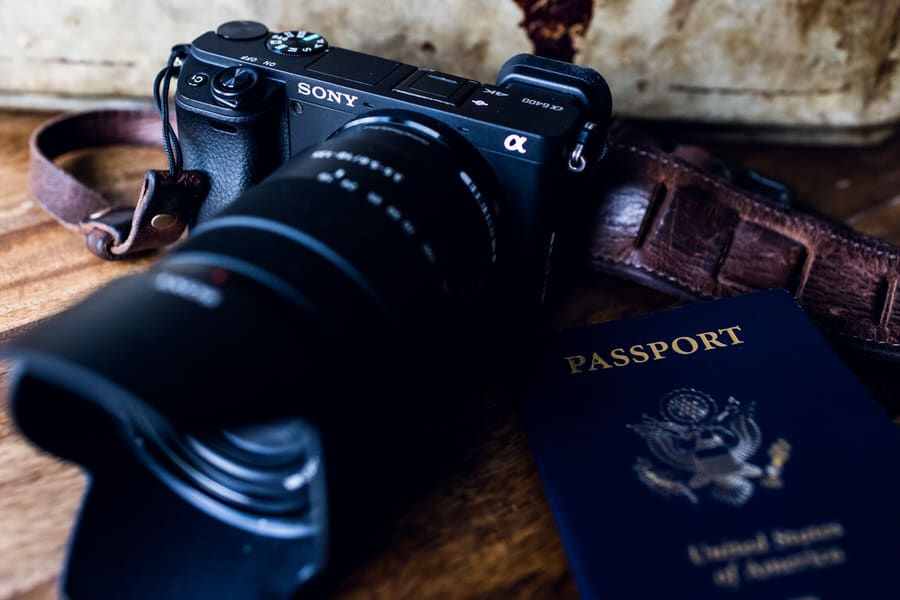
What Makes the Sony a6400 Stand Out
The Sony a6400 is built around a 24.2-megapixel APS-C sensor — the same sensor found in the a6300. It weighs just under a pound with the body only, measures roughly 4.5 inches wide, and features a 3-inch tilt screen paired with a 2,359k-dot electronic viewfinder. All of this comes wrapped in a weather-sealed body that feels substantial in the hand despite its small footprint.
What immediately stands out is how well this camera balances portability with a professional feel. The grip is ergonomic, the weight distribution feels intentional, and the overall design screams "take me everywhere." For photographers who want a capable camera that doesn't weigh down a shoulder strap during a full day of shooting, the a6400 delivers.
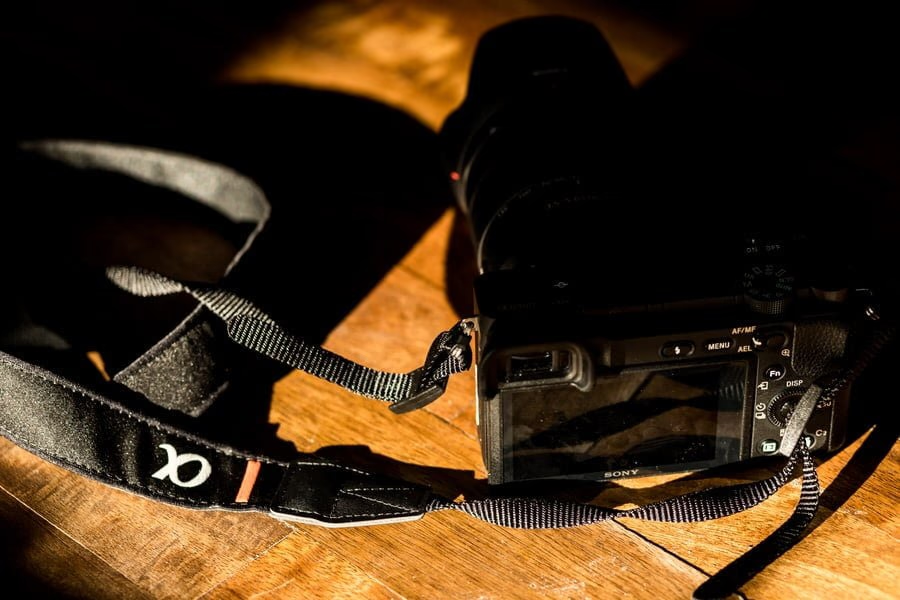
Autofocus: The Real Reason to Buy This Camera
Let's be direct: Sony's autofocus system is the headline feature, and the a6400 continues that tradition. With 425 phase-detection AF points and 425 contrast-detection AF points, the camera locks onto subjects in approximately 0.02 seconds. That's not just marketing — it's genuinely impressive in practice.

The real game-changer is Sony's Eye AF, which stays active continuously. Whenever you're composing a shot, the camera automatically seeks out and locks focus on the subject's eye. We tested this repeatedly across different scenarios, and it performed remarkably well. Combine this with real-time focus tracking, and you have a system that keeps subjects sharp even when they're moving unpredictably — kids running around, couples dancing at a wedding, or a model shifting poses during a portrait session.
For video shooters, this is a meaningful upgrade: the a6400 uses contrast detection in both stills and video mode, ensuring smoother focus transitions while recording.

Image Quality: Solid, With Some Caveats
The 24.2-megapixel sensor produces images that are crisp and well-detailed — excellent for a travel or family camera. Colors render naturally, and in good light the results are genuinely satisfying. The camera shoots at up to 11 frames per second in continuous mode while maintaining autofocus in full RAW, which is more than adequate for most action scenarios.

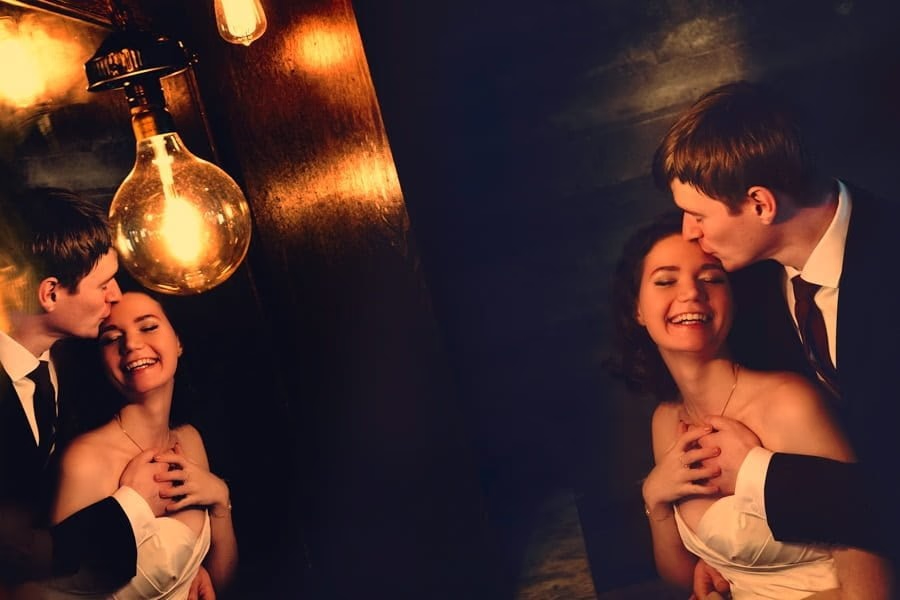
However, the a6400 isn't without its limitations. Sony claims excellent dynamic range, but I found that in certain lighting conditions, the camera struggled to retain detail in both shadows and highlights simultaneously. More notably, low-light performance is where this camera shows its APS-C sensor constraints. The native ISO range spans 100 to 32,000, expandable to 102,400, but anything above ISO 2,000 begins to show noticeable noise. During an indoor wedding sequence, I was disappointed with the low-light results — though with careful technique and slower, more deliberate shooting, I still managed to pull off some keeper images in tricky bulb-lit environments.


The Touchscreen and Flip Screen: A Missed Opportunity
This is where Sony continues to frustrate. The a6400 is marketed as having a touchscreen, but in practice the responsiveness is painfully slow. Basic operations like selecting menu items, tapping to focus, or pinch-to-zoom feel sluggish and unreliable. I gave up using the touchscreen entirely during testing.
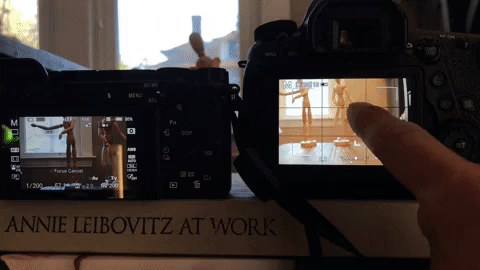
The flip screen is equally awkward. Opening it feels clunky, and flipping it up for selfies or vlogging requires an odd maneuvering motion. If you're a content creator who relies on a front-facing screen, be aware that any microphone mounted on the hot shoe will partially block the flipped-up display — a well-known complaint that has spawned various workaround rigs in the accessory market.
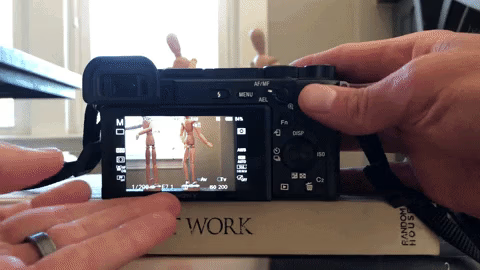
The Sony Menu System: Still Overwhelming
Like other Sony Alpha cameras, the a6400 suffers from an overly complex menu system. The sheer number of options can feel paralyzing, especially for photographers coming from more streamlined systems. The saving grace is Sony's custom menu feature, which lets you pin your most frequently used settings to a personalized quick-access page. It's worth spending time setting this up — it transforms the shooting experience from frustrating to functional.
Lens Pairings That Make the Difference
The kit lens Sony supplies — typically the 18-135mm f/3.5-5.6 — is competent but limiting. Its maximum aperture of f/3.5 at the wide end and f/5.6 when zoomed restricts your ability to shoot in low light or achieve a shallow depth of field. The lens also feels disproportionately large on the compact body, throwing off the otherwise excellent weight balance.
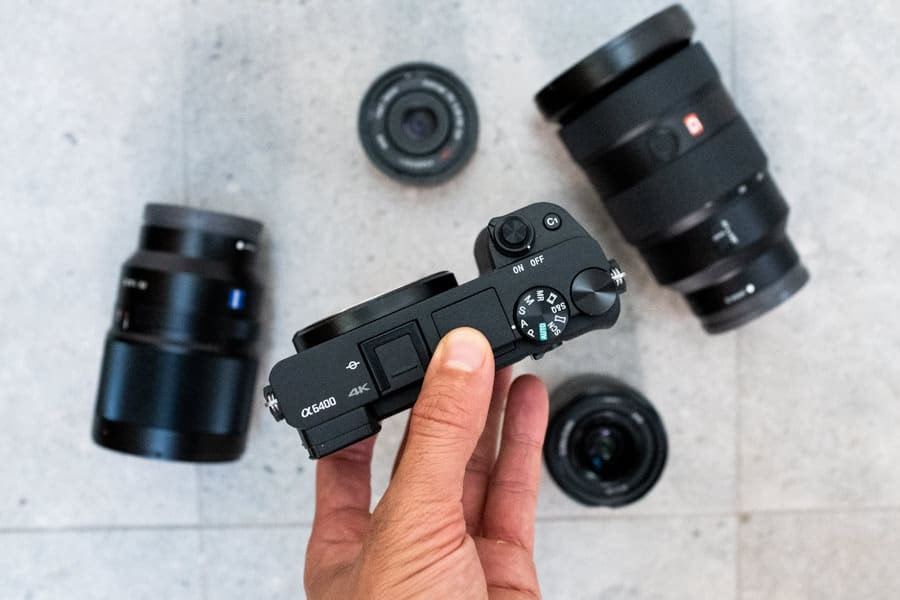
Investing in faster glass transforms the a6400 experience. The Sony FE 28mm f/2 is a standout pairing — compact, relatively affordable, and capable of producing pleasing bokeh at a versatile focal length. Another excellent option is the Sony FE 35mm f/2.8 Zeiss, which is so small and lightweight it barely feels like there's a lens attached. With the APS-C crop factor, it delivers a roughly 50mm equivalent field of view — ideal for everything from street photography to environmental portraits.


If you don't mind the added bulk, Sony's f/2.8 G Master zooms unlock the camera's full potential — just be prepared for a front-heavy setup that may require a tripod for comfortable extended use.
Video Capabilities
The a6400 shoots 4K video at 3840 x 2160 resolution with frame rates up to 120 fps for smooth slow-motion footage. That's impressive for a camera in this price range. However, there are two notable omissions: no in-body image stabilization and no headphone jack — only a microphone port is available. For handheld video work, you'll want a stabilizer or gimbal, and monitoring audio means relying on on-screen levels rather than real-time listening.
Practical Tips for Shooting with the Sony a6400
- Set up the custom menu immediately: Pin your most-used functions — focus mode, file format, white balance, and drive mode — to avoid digging through endless menus mid-shoot.
- Pair it with fast glass: A lens with a maximum aperture of f/2.8 or wider will dramatically improve low-light performance and creative control over depth of field.
- Keep ISO below 2,000 when possible: Noise becomes noticeable above this threshold; use faster lenses or add light rather than pushing ISO higher.
- Watch those back buttons: The compact body means buttons are tightly packed. Be mindful of accidentally pressing them with your cheek when using the viewfinder.
- Invest in extra batteries: Battery life is not a strong suit — carry at least one spare for a full day of shooting.
- For vlogging, consider an offset rig: If you plan to use the flip screen with an external mic, a small rig accessory will let you mount the mic away from the screen.
Final Verdict
The Sony a6400 is a superb everyday camera for travel, family moments, and casual adventures. Its combination of compact size, blazing autofocus, and solid image quality makes it an easy recommendation for hobbyists and Sony enthusiasts looking for a capable second body. At around $900 for the body only, it represents fair value for what it delivers.
That said, I wouldn't recommend it for professional wedding photographers or anyone who regularly shoots in challenging low-light environments. There are systems available that handle high-ISO situations more gracefully and offer more intuitive interfaces for fast-paced professional work.
If you're already invested in the Sony ecosystem and want a fun, portable camera that won't break the bank, the a6400 will serve you well. If you're considering switching from another brand solely for this camera, try several Sony models first — the a6400 alone may not justify the switch.
Frequently Asked Questions
Is the Sony a6400 good for beginners?
Yes, the a6400 is a solid choice for beginners who are serious about learning photography. The automatic modes produce reliable results out of the box, and the camera offers plenty of room to grow into manual controls. Just be prepared to invest some time in learning the menu system, and consider setting up the custom menu early to simplify your workflow.
Does the Sony a6400 have in-body image stabilization?
No, the Sony a6400 does not include in-body image stabilization (IBIS). If stabilization is critical for your work — particularly for handheld video or shooting with longer lenses — you'll need to rely on optically stabilized lenses or use an external stabilizer such as a gimbal.
Is the Sony a6400 weather-sealed?
The a6400 features weather sealing that provides protection against light moisture and dust, making it safe to use in light rain or dusty conditions. However, it is not waterproof or fully weatherproof, and Sony does not recommend using it in heavy rain or submerging it in water.
What lenses work best with the Sony a6400?
The a6400 uses Sony's E-mount system, which means it's compatible with both APS-C E-mount lenses and full-frame FE-mount lenses. Compact primes like the Sony FE 28mm f/2 and Sony FE 35mm f/2.8 Zeiss are excellent pairings that maintain the camera's portable feel while delivering sharp results and pleasing background blur.
Is the Sony a6400 still worth buying in 2024 and beyond?
Absolutely. While newer models have entered the market, the a6400 remains a highly capable camera with class-leading autofocus that still holds up well. For travel photographers, content creators, and hobbyists who prioritize a compact body with interchangeable lens flexibility, the a6400 continues to offer excellent value.