For anyone who hikes with a camera, the eternal question is where to put it. Most backpacking packs require you to shrug off the load just to grab your gear. Hand-carrying works for half a mile — then the fatigue sets in. Chest harnesses can chafe against a loaded pack. That is exactly the frustration that led traveler Peter Dering to quit his job in 2011, launch a Kickstarter campaign, and create the original Capture Clip — and with it, the entire Peak Design brand. Now in its third generation, the Capture Clip V3 promises to keep your camera within arm's reach, right on your shoulder strap. Here's how it holds up after months of real-world use.
---
Design and Build Quality
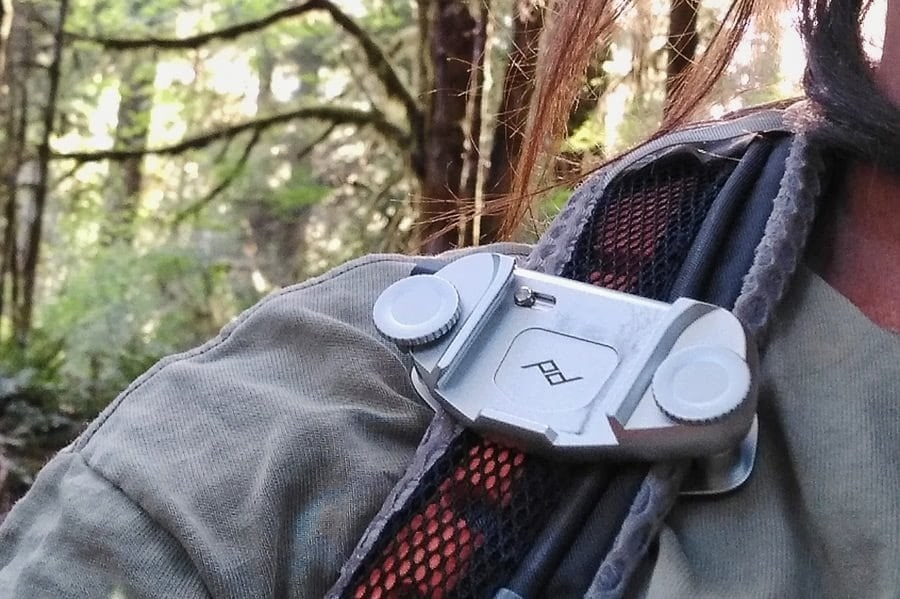
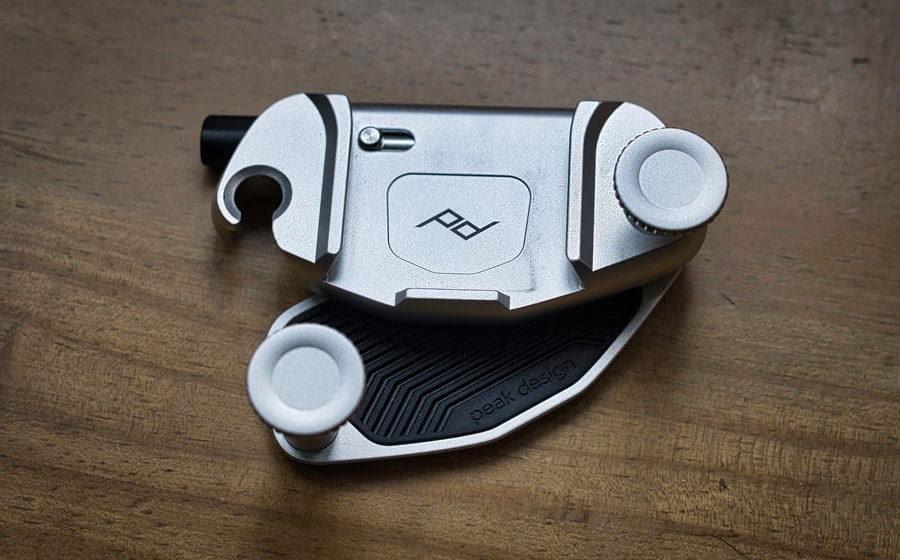
The Capture Clip V3 is machined from weatherproof, rust-resistant aluminum and weighs just 3 ounces (84 grams). It feels substantial in the hand, but once mounted on a backpack strap, the weight vanishes entirely. The included standard plate — ARCA-Swiss compatible — weighs a mere 0.5 ounces (14 grams) and attaches to your camera with the supplied hex key.
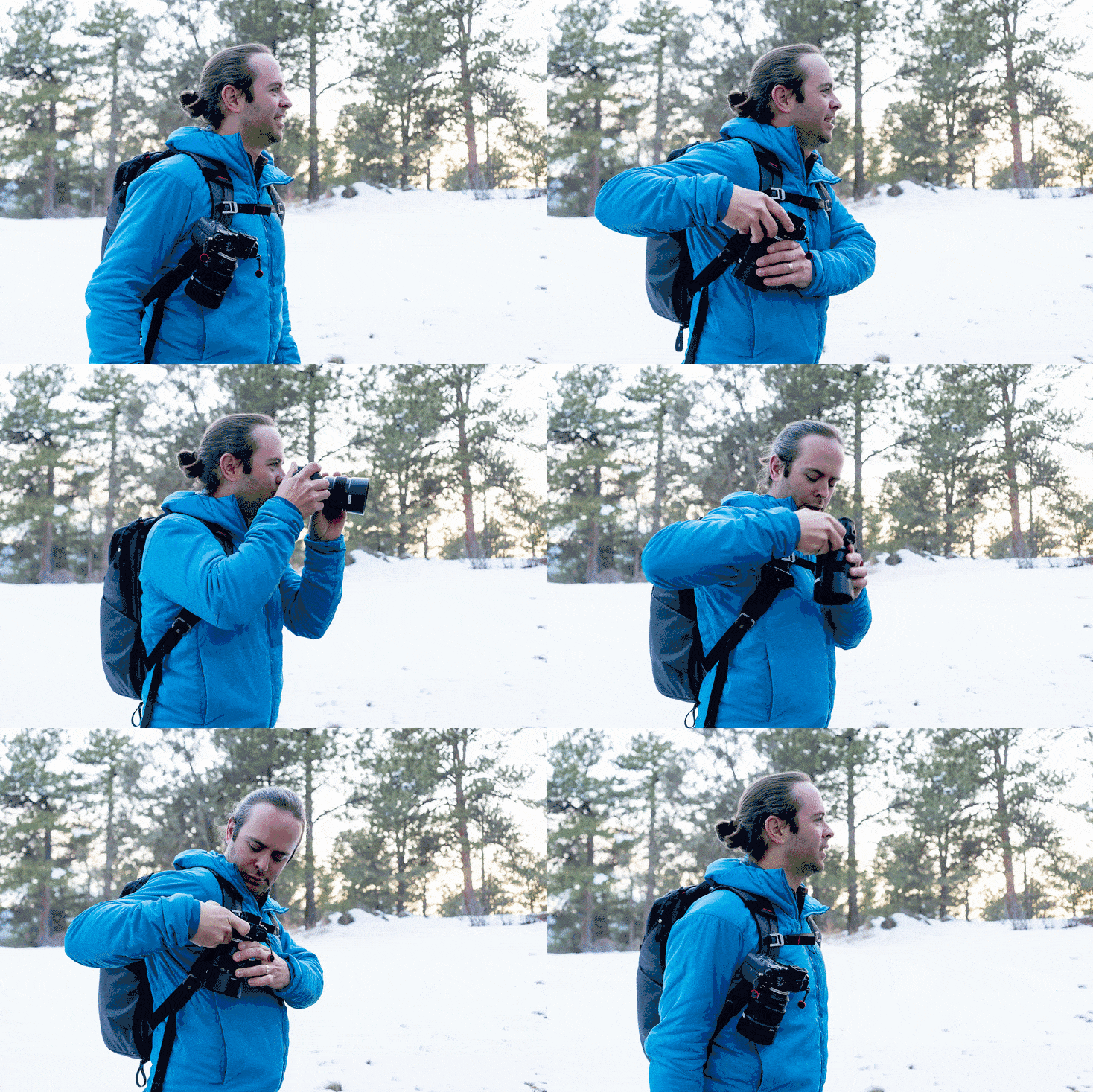
The plate's standout feature is four-way entry. There is no front or back — slide your camera in from any direction, which is invaluable when you are on uneven ground and need quick, intuitive access. The safety lock mechanism is equally refined: a simple 90-degree turn of the quick-release button locks or unlocks the clip, with a visible hash mark confirming the status. It is far less bulky than the locks found on versions 1 and 2.
The rubberized backplate prevents scuffing on backpack fabric, and the entire assembly is rated to hold up to 200 pounds (90 kilograms) — far beyond what any practical camera setup demands.
---
Installation: Getting the Fit Right
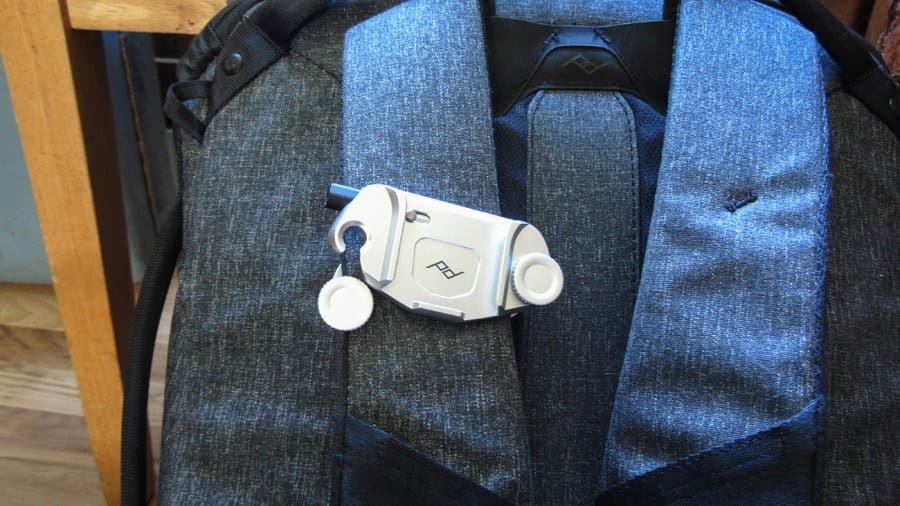
The clip ships with two types of screws — thumb screws and longer hex screws — and choosing the right one makes all the difference. Thumb screws work well on thinner straps and belts. For padded backpack straps, use the longer hex screws. My first attempt with thumb screws on a Peak Design Everyday Backpack left the clip loose and unstable; switching to hex screws solved the problem immediately.
A useful tip: with hex screws, you will not feel resistance when they are tight. Test manually by trying to wiggle the clip on the strap. If it does not budge, you are done. Overtightening risks damaging the strap fabric.
The Capture Clip accommodates straps up to roughly 2.5 to 3 inches wide and 0.87 inches thick. It worked flawlessly on my Osprey day pack. On my larger multi-day rucksack with heavily padded straps, the fit was frustratingly tight — Peak Design suggests pinching the foam and squeezing the clip on, though your mileage may vary.
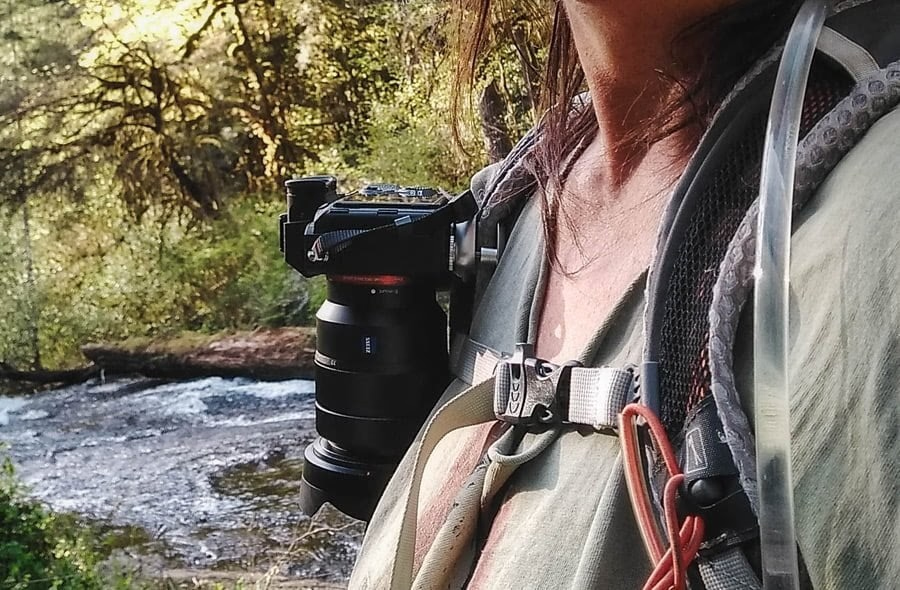
Placement is flexible. Peak Design recommends the right shoulder strap just above the sternum on a backpack, or slightly off to the right on a belt. For one-handed access, keep the quick-release button facing inward on shoulder straps and downward on a belt.
---
Real-World Use on the Trail
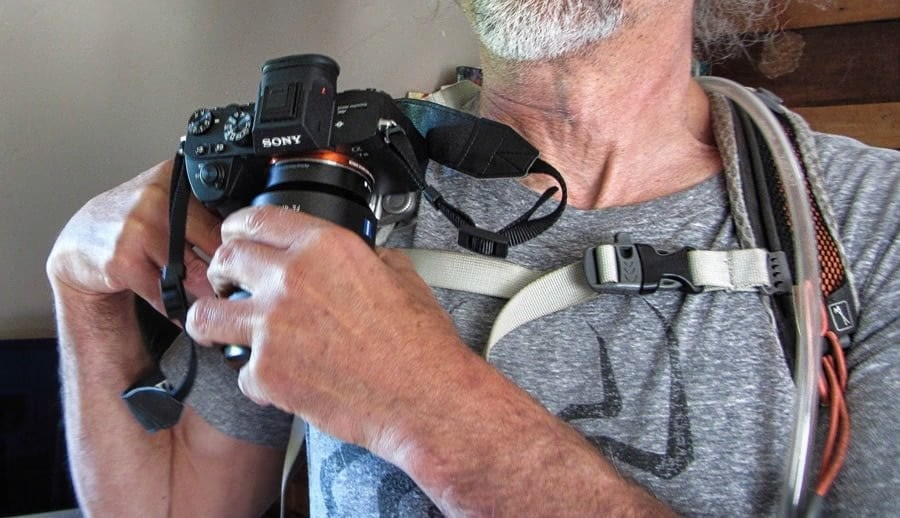
One-handed operation takes practice but quickly becomes second nature. Start with two hands while you build the muscle memory. Slide the camera in until you hear a decisive click — that means it is secure. There is a small amount of intentional play between the camera and the clip; without it, insertion and removal would be impossible.
On the trail, I never once felt my camera was at risk of coming loose. For extra peace of mind, the safety lock engages with a quick 90-degree twist. Just remember to unlock it before reaching for your camera.
---
Accessories Worth Considering
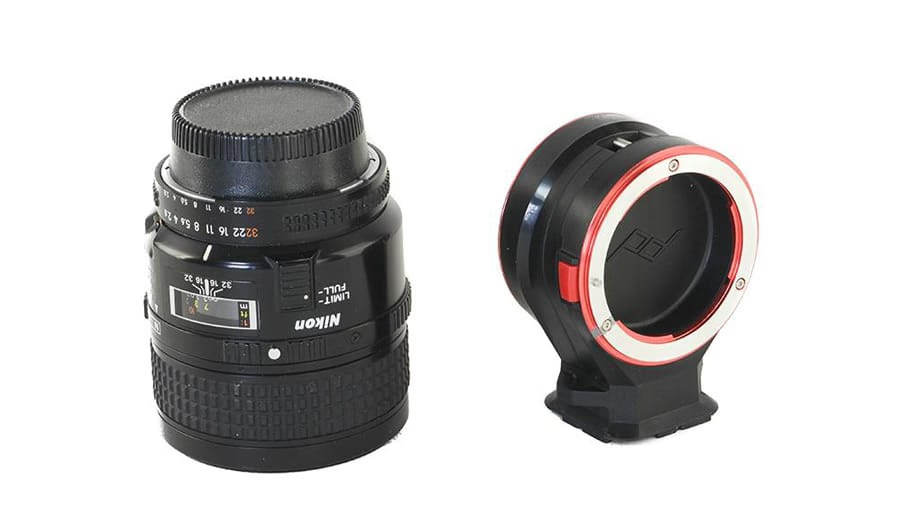
Peak Design has built a small ecosystem around the Capture Clip. The dual plate version supports Manfrotto RC2 tripod heads, though it sacrifices four-way entry for two-way only. The Bino Kit adapts the clip for binoculars — excellent for birders and hunters. The Lens Kit lets you carry spare glass on your belt with mounts for Nikon, Canon, and Sony systems. For heavier setups like a full-frame DSLR with a large zoom, the Pro Pad adds meaningful stability and weight distribution.
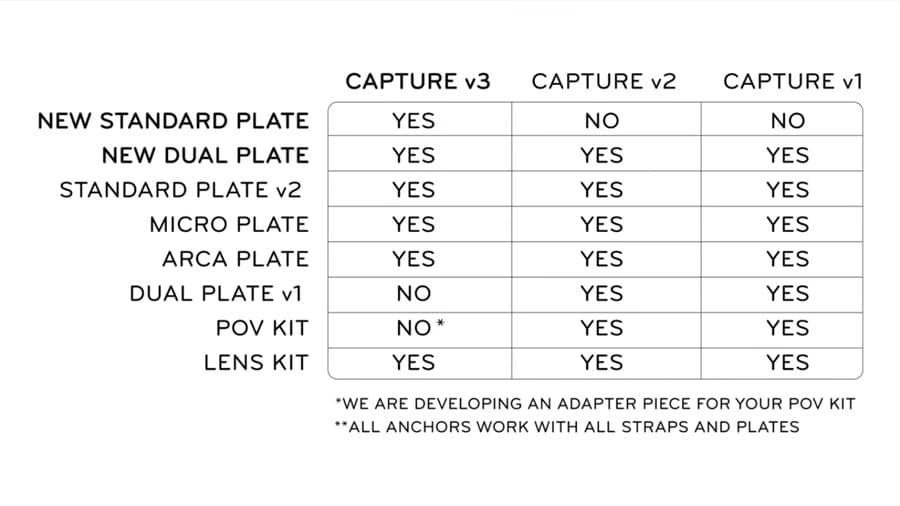
Most accessories remain backwards compatible with earlier Capture Clip versions, though a few specific combinations require checking Peak Design's compatibility chart.
---
Practical Tips
- Mount your camera vertically (sideways) when using compact prime lenses — this directs the weight downward for a more secure hold on the trail.
- Use a belt-mounted configuration as a stable lens-changing platform: slide the camera in vertically and it stays put while you swap glass.
- Practice one-handed access at home before your first hike. The quick-release button must face inward on backpack straps for smooth operation.
- If your tripod uses a non-ARCA plate, keep the included hex wrench in your pack — you will need it to swap plates.
---
Final Verdict
I did not expect to love the Capture Clip, but after several day hikes I was completely won over. It eliminates the need to hand-carry a camera or wear an uncomfortable chest harness over a loaded pack. It is light, intuitive, secure, and works across a broad range of straps and camera systems. A few minor annoyances exist — the clip does not fit every thick backpack strap, and if your tripod uses a non-ARCA plate you will be swapping plates regularly — but these are small trade-offs for what the product delivers. For hikers, travelers, and outdoor photographers, the Peak Design Capture Clip V3 is an investment that genuinely improves how you carry your gear.
---
FAQ
Does the Peak Design Capture Clip work with any camera?
It works with DSLRs, mirrorless cameras, point-and-shoots, action cameras, and even binoculars and lenses — as long as the appropriate plate or accessory kit is used. The standard plate fits any camera with a standard 1/4-inch tripod thread, which covers the vast majority of models on the market.
Will the Capture Clip fit on thick backpack straps?
It fits most straps up to roughly 2.5 to 3 inches wide and 0.87 inches thick. For heavily padded or rigid straps, you may need to use the longer hex screws and compress the foam before mounting. Some multi-day backpacking packs with very thick padding may be too tight, so check your strap dimensions before purchasing.
Is the Capture Clip V3 compatible with ARCA-Swiss tripods?
Yes, the standard plate that ships with the Capture Clip V3 is fully ARCA-Swiss compatible. If your tripod uses a Manfrotto RC2 head instead, Peak Design sells a separate dual plate that supports both systems, though it reduces the clip entry from four-way to two-way.
How secure is the camera when using the Capture Clip?
Extremely secure. The clip is rated to hold 200 pounds (90 kilograms), which far exceeds any camera setup. Once the plate clicks into place, the camera stays locked in. A small amount of intentional play exists to allow smooth insertion and removal — this is normal and does not compromise security. The optional safety lock adds another layer of protection with a simple 90-degree turn.
Can I use the Capture Clip with a heavy DSLR and a telephoto lens?
Yes, though for heavier combinations Peak Design recommends adding the Pro Pad accessory, which sits behind the clip on your belt or strap and provides extra stability and weight distribution. Without it, a heavy setup may bounce or feel unbalanced during vigorous hiking.